Back in 2024, we took you along on a journey across the McDonald’s universe to a place called CosMc’s, a coffee-and-bakery concept inspired by the retro McDonaldland alien of the same name. Since our last post about CosMc’s, a lot has happened to the concept chain and now it seems it’s brief run is over. Join us as we recap CosMc’s and provide an update to this once unique spinoff chain.
The Launch of a Cosmic Concept:
Back in early 2023, McDonald’s began teasing and circulating mysterious space themed advertising for a new concept. As months went on, the mystery and suspense built until they formally announced later that year the idea for a new stand alone chain called CosMc’s.
The idea was simple but bold: take McDonald’s in a more out-of-this-world direction with vibrant specialty drinks, crave-worthy bakery items, and an energy that felt more like your favorite neighborhood café than a fast-food counter.
Gee.. doesn’t that sound familiar? Speciality drinks? Bakery items? Neighborhood cafes? Sounds like a Starbucks knockoff! To be frank, in a way maybe it was but it was far from anything Starbucks was doing. The whole idea for this chain stemmed from trying to boost mid-day sales in between lunch and dinner.
Rather than revamping the entire menu which was a proven success, McDonald’s decided to try a new concept where they could test new smaller format stores, new kitchen technology and newer menu items without burdening or disrupting normal business.
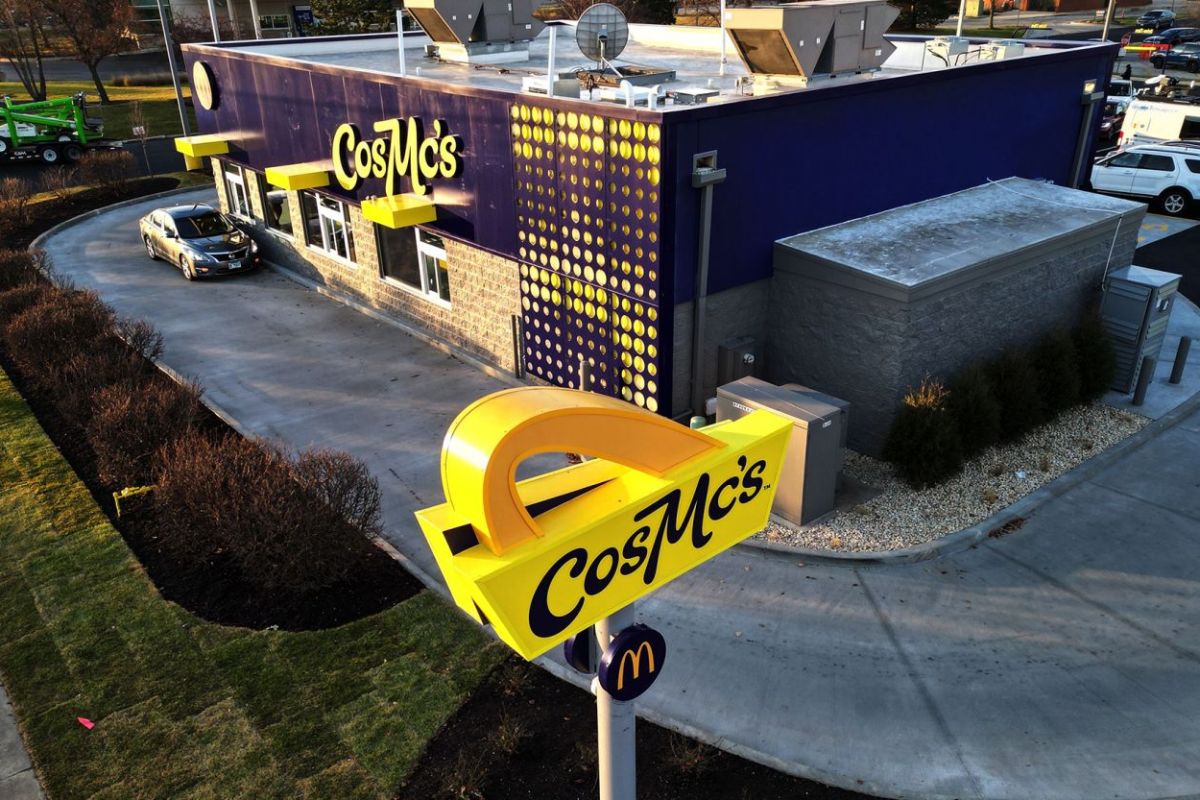
The first location opened in Bolingbrook, Illinois in December 2023, and fans wasted no time lining up. This wasn’t your everyday McDonald’s though. From the colorful “Island Pick Me Up Punch,” sweet-and-spicy “Churro Cold Brew Frappés,” customizable Fruity Popping Boba, and snackable hits like Savory Hashbrown Bites and McPops. It was an equal parts nostalgia trip and menu playground.
Initially, McDonald’s had big plans which called for about 10 pilot locations by the end of 2024, with a few in Texas. After the first location opened, these plans came about and a total of 5 locations were actually opened.
A Short Orbit: The Shutdown of CosMc’s
So what exactly happened to this unique space and nostalgia fused chain? Well, despite strong customer feedback early on, and finding the smaller drive-thru–only formats performed best, it was not sustainable. As the months passed and the hype settled down, sales started to plateau. Even the cosmic vibes couldn’t fully escape the pull of slowing consumer spending and some tough competition in the beverage space.
By May 2025, McDonald’s made a tough call: all five CosMc’s locations in Illinois and Texas would close by late June. The CosMc’s app and rewards program? Also phased out.
Despite being its own standalone chain, CosMc’s was never meant to replace or compete directly with the Golden Arches. Instead, it was meant to be a “learning lab” for bold flavors, smaller-format stores, and tech-savvy service. This was more meant to be like an experiment to see what works and does not work.
CosMc’s Lives On: Flavors Enter the Golden Arches
Despite CosMc’s forever disappearing, McDonald’s isn’t tossing those spacey drink recipes into a black hole. Instead, they’re bringing CosMc’s favorites to existing U.S. restaurants as part of a new beverage test program.
As of August 2025, over 500 McDonald’s locations from Wisconsin to Colorado are pouring CosMc’s-inspired drinks like:
Creamy Vanilla Cold Brew
Strawberry Watermelon Refresher
Sprite Lunar Splash
Popping Tropic Refresher
Toasted Vanilla Frappé
It’s a way for McDonald’s to keep experimenting, but on a much bigger stage. If these drinks take off, they could go nationwide. Meaning you might be able to sip a little slice of CosMc’s without ever leaving your local drive-thru.
Final Thoughts
CosMc’s may have had a short orbit, but it certainly left its mark on McDonald’s history. In less than two years, it went from a secretive teaser campaign to fan-favorite beverage stop. While the standalone storefronts have vanished, its most creative flavors now have a shot at living on through the Golden Arches themselves.
If nothing else, CosMc’s proved that McDonald’s isn’t afraid to experiment, play with nostalgia, and take risks outside its comfort zone. Whether you loved it for the colorful drinks, the snackable bites, or simply the novelty of seeing a McDonaldland alien mascot revived from the 80s, it sparked curiosity and that’s a win in itself.
Now, the real question is: will these drinks thrive in the main McDonald’s menu, or will they fade away like a shooting star?
We’d love to hear your thoughts. Did you get to visit a CosMc’s location before they closed? Which drink or snack would you want to see stick around for good? Drop a comment below, share your memories, and if you enjoyed this trip through McDonald’s latest cosmic adventure, don’t forget to like, share, and subscribe so you don’t miss our next taste-test or industry deep dive.
If you’ve ever road-tripped through America or searched for a basic, affordable hotel, chances are you’ve come across a Comfort Inn. And if you’ve ever stayed at one, you might understand why I never have.
Like many others, I too always felt that Comfort Inns were stuck in the past. Dated rooms, inconsistent service, and a lack of basic amenities made these properties feel more like a blast from the past than a modern stay. For years, while hotel giants like Hilton, Marriott, and IHG aggressively refreshed their brands and raised standards, Choice Hotels seemed to be coasting on autopilot.
That finally seems to be changing for the better. Now sit back and come along as I take you through all the changes Comfort Inn and Country Inn & Suites are going through to become the hotel chains they deserve to be.
A Long Overdue Refresh
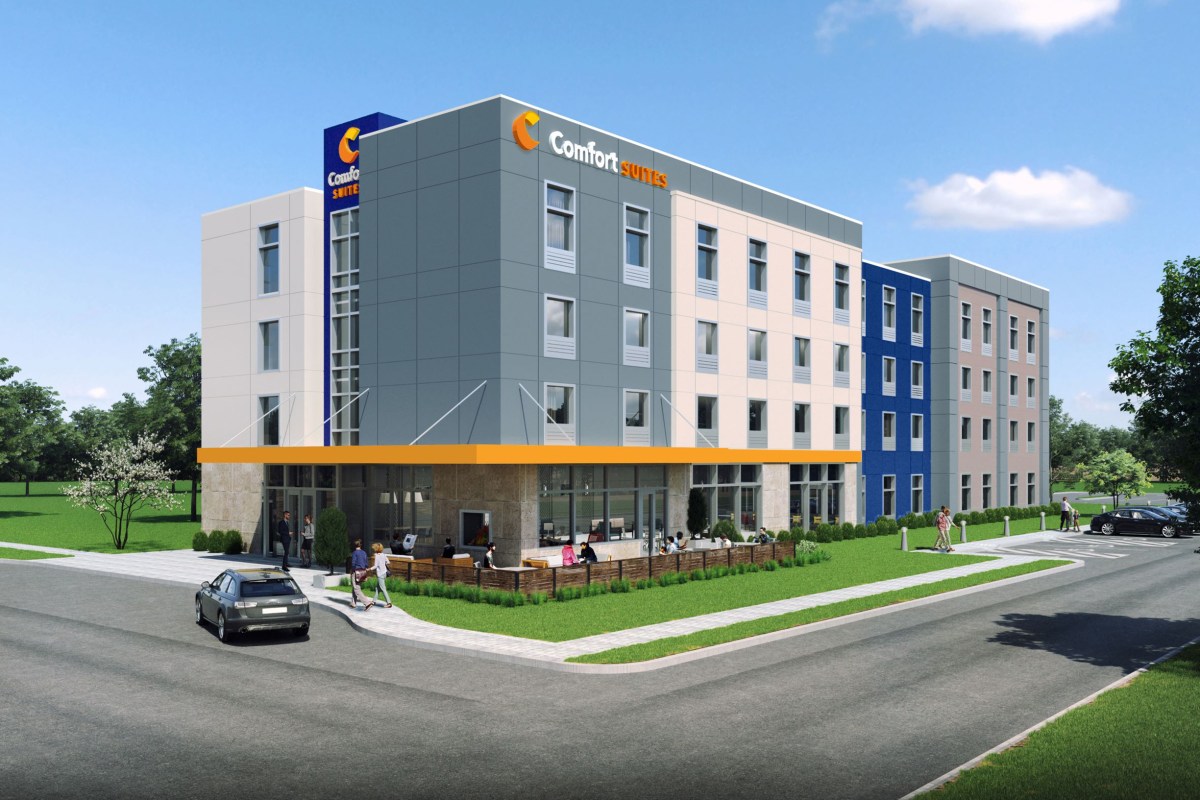
In 2021, Choice Hotels unveiled the Comfort Rise & Shine prototype, marking a significant milestone for its flagship brand as it celebrated its 40th anniversary. This new design aimed to modernize the Comfort brand and position it for continued growth in the upper midscale segment.
It is very clear that attention was paid to every single detail from day to day operations, franchisee feedback and most importantly the guests experience. The new design makes the best of both worlds for both franchise owners and guests.
Key features of the Rise & Shine prototype include:
Reducing the average square footage of newly built hotels by an average of 3,000 to 4,000 square feet.
New guest spaces and that allow for flexibility and new revenue opportunities.
Examples include new outdoor porches and multi-purpose flex rooms that easily transform from additional breakfast space to meeting and event space.
Easily adaptable designs to allow for customization based upon geographic location and to fit the needs of the local market.
City (bold yet approachable with rich wood tones), Sea (calm and soothing with muted colors and light wood tones), and Sun (vibrant and cheerful with a relaxed yet optimistic
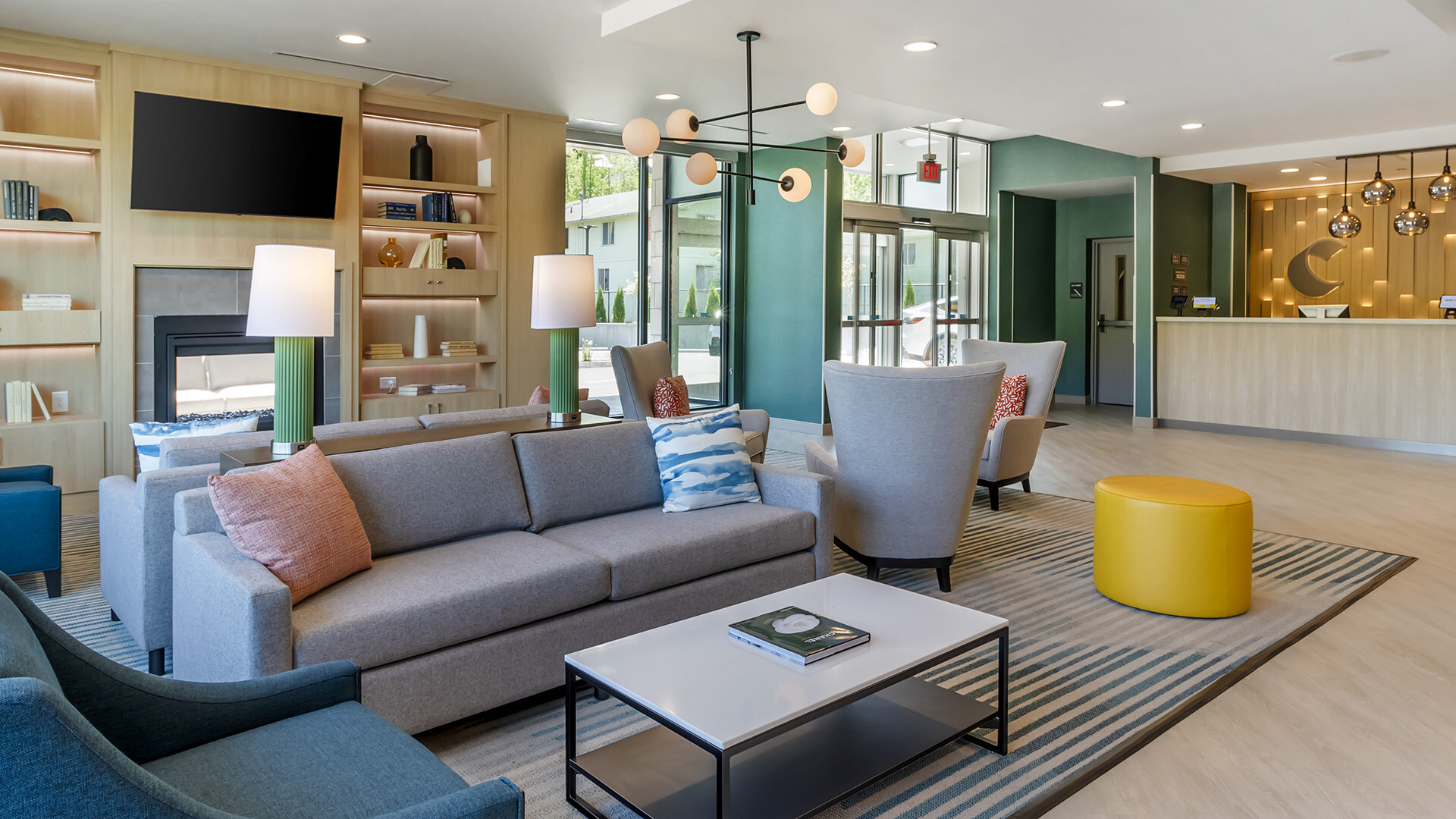
Outdoor patios anchored by an indoor/outdoor fireplace, open and airy public spaces with high ceilings and floor-to-ceiling windows to maximize natural lighting, and guest rooms featuring upgraded fixtures and furniture, including semi-open closets and new “on the go” stations at the door.
Empehis on better and more comfortable lighting throughout interior and exterior spades.
Examples include the front desk welcome wall, public space millwork shelving, exclusive up-lighting on the guest room headboard wall and media panel, and on the prototype exterior.
As Megan Brumagim, Vice President of Brand Management, Design, and Compliance at Choice Hotels, stated,
“The prototype combines the features, design, and amenities that guests want, with the efficiency, functionality, and flexibility that developers expect. It offers spaces that can transform from day to night and serve a broad range of guest stays, whether business or leisure.”
So far, the new The Rise & Shine prototype has been adopted in over 140 properties across the U.S., including locations in Nashville, Huntsville, and Fort Myers. These updates have led to increased guest satisfaction scores compared to previous designs. Additionally, the updated design package has resulted in a 16% average cost optimization for owners, achieved through smart, innovative design and partnerships.
Country Inn & Suites: A Fresh Take on Generous Hospitality
Comfort Inn is not the only brand getting a major retool and refresh. Following Choice Hotels’ acquisition of Radisson Hotels Americas in 2022, the company has made significant strides in revitalizing the Country Inn & Suites by Radisson brand. (If you are interested in learning more about this acquisition, check out our post: Choice Hotels Acquires Radisson Hotel Group Americas – Thoughts & Reactions)
The refreshed prototype emphasizes a philosophy of generous hospitality, appealing to guests who value a comfortable, relaxed environment with a residential ambiance.
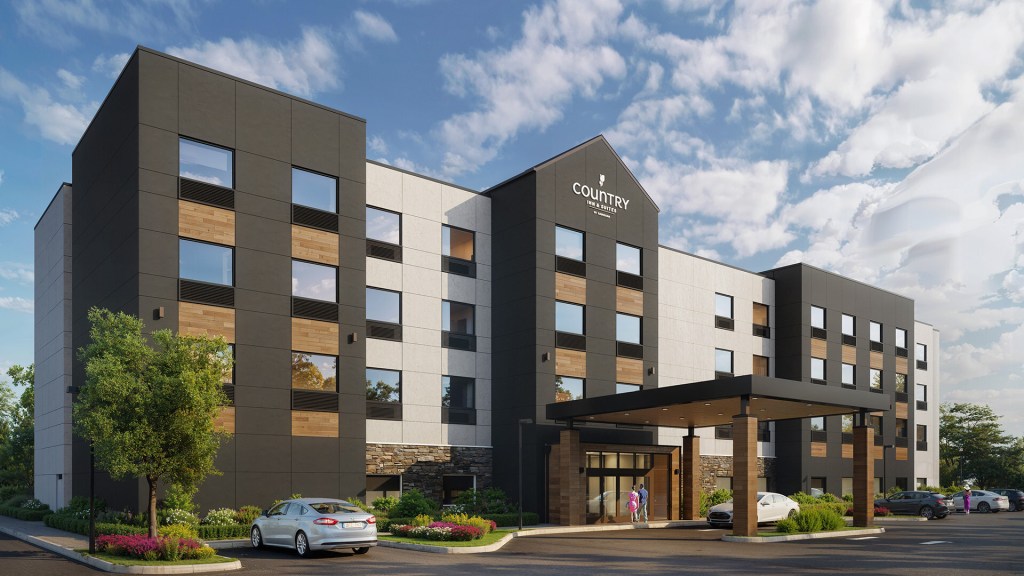
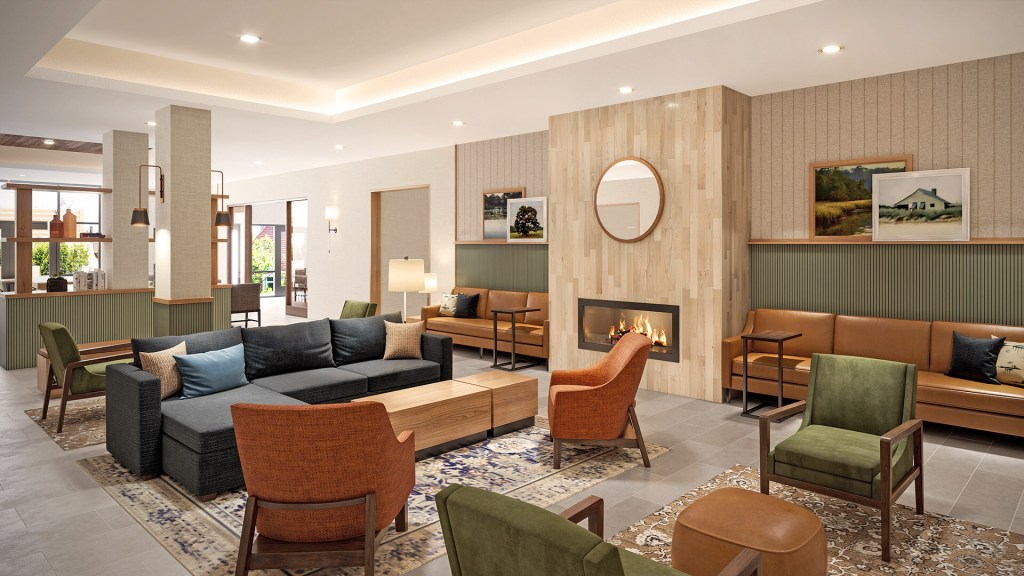
Unfortunately, there is not many renderings or images available for the prototype nor could I find any official confirmation of any locations using the new design. The only information that I could reliably find was directly from the Choice Hotels website which is where I find the renderings below:
Key updates include:
Similar to what we have seen with the Comfort Inn upgrades, the Country Inn & Suites also optimized their layout and square footage required for new hotels built. During this process, the prototype gained enough space for 18 keys (rooms).
Reduced costs for owners and operators while maintaining the rich legacy of Country Inn & Suites.
Guests are now greeted with a signature freshly baked chocolate chip cookie and can unwind in cozy public spaces designed with a residential ambiance, including a well-scaled single-story connected lobby and dining space.
The results speak for themselves in a positive way with higher reported revenue, more direct bookings and a higher growth in business travel. Furthermore based on guest surveys done, 84% of guests reported they would likely stay at a Country Inn & Suites hotel following the design refresh.
Why Now?
Frankly, this move was necessary years ago. I mentioned this same issue in my blog post on Wyndham’s new prototypes: many economy and midscale hotel brands lost appeal over the last decade because their parent companies fell behind on innovation. While Hilton and Marriott were rolling out new flagships and modernizing legacy brands, Choice and Wyndham moved much slower.
That said, Choice wasn’t completely idle. While Wyndham largely maintained the status quo, Choice at least took some strategic steps launching new brands like Everhome Suites and acquiring Radisson Americas, which included the Country Inn & Suites brand. Still, the flagship Comfort Inn brand continued to lag in perception.
The reality is that Comfort Inns across the country became wildly inconsistent. Some locations are clean and decently maintained; others feel like stepping into a time capsule. That inconsistency is a byproduct of franchise-heavy models where enforcement of brand standards can be lax.
However, this seems to be the first step forward to changing this long standing issue for Comfort Inn. The new design looks fresh and is ready to compete with other budget chains and even the big players like Hilton or Marriott. However though, without continuous brand enforcement or regular investment in property improvements, even a great prototype can fall flat once rolled out.
Can It Make a Difference?
It’s encouraging to see Choice Hotels investing in its core brands, even if it feels a little late. There’s clear intention here not only with fresh designs but also in the language they’re using. The new branding is more than a logo swap; it’s about “sharpened identities” and modern guest experiences.
Will it work? That depends on execution. If franchisees adopt the new prototype widely and Choice commits to stronger brand enforcement, it could help repair Comfort’s reputation and make it a serious contender in the midscale space once again.
For now, it’s a step in the right direction and one that’s been a long time coming.
The headlines have been busy these first few months of 2025 with yet another major player in the hotel scene making an announcement on new developments. In a recent press release, IHG Hotels & Resorts introduced the future-ready Generation 5 concept for Holiday Inn Express, set to revolutionize its public spaces across Europe, the Middle East, Asia, and Africa (EMEAA).
Before we get into my personal thoughts and reactions, let’s dive into a brief recap of what Generation 5 is all about.
Future Ready – Generation 5
It is clear the focuses on the new design are all centered around guest experience, diversity and inclusivity. The Generation 5 design reflects insights from extensive research into traveler preferences, including the demand for experiential and sensorial spaces. With zones like the EXPRESS Café & Bar and Focus Studio, guests can socialize, relax, or work in vibrant settings tailored to their lifestyles. Smart guest room features, such as ergonomic workspaces, ample USB ports, and Smart TVs, complement the elevated public spaces.
Each hotel will incorporate elements that reflect its local destination, ensuring a distinct sense of place. Moreover, IHG collaborated with a disability task force to create public spaces that are inclusive and accessible, catering to diverse needs and fostering a welcoming environment for all.
The Generation 5 design also focuses on offering flexibility and cost-effectiveness for hotel owners. Its scalable layout allows for easy adaptation across different locations while keeping costs manageable. This ensures that owners can maintain strong financial returns without sacrificing the high-quality standards Holiday Inn Express is known for.
When asked about his thoughts on the new design, John Wright, Vice President of Mainstream Brands for EMEAA at IHG had this to say:
“Generation 5 is a premium, vibrant, and dynamic design that leans into a lifestyle vibe that’s on trend. It’s playful and distinctive nature defines the witty personality of Holiday Inn Express, while its flexibility ensures each hotel reflects a sense of place.”
Generation 4 vs Generation 5:
Holiday Inn Express first introduced its Generation 4 design in 2016, focusing on modernizing guest rooms and public spaces with smarter layouts, improved service delivery, and enhanced technology. While it set a new standard for efficiency and comfort, Generation 5 takes things a step further by creating more dynamic, flexible, and experiential public spaces that cater to evolving traveler expectations.
Here’s how Generation 5 builds upon and improves the previous design:
More Experiential Spaces – Generation 5 introduces zoned public areas like the EXPRESS Café & Bar and Focus Studio, designed for socializing, working, and relaxing. Generation 4 emphasized functionality, but the new design brings a more vibrant, lifestyle-focused atmosphere.
Greater Flexibility – The new design allows hotel owners to adapt and scale spaces based on location and market needs while remaining cost-effective. Generation 4 was more standardized, whereas Generation 5 offers more local character and customization.
Enhanced Guest Engagement – Research shows travelers today want spaces that encourage connection and comfort. Generation 5 delivers this through inspiring aesthetics, multi-use furniture, and tech-forward features, making public areas feel more inviting.
Stronger Sense of Place – Unlike Generation 4, which had a uniform look, Generation 5 embraces local design elements, giving each hotel a unique identity while staying true to the Holiday Inn Express brand.
Inclusivity & Accessibility – Generation 5 was developed with insights from a disability task force, ensuring public spaces are more accessible and easier to navigate for all guests.
While Generation 4 modernized the Holiday Inn Express experience, Generation 5 reinvented it to deliver a smarter, more engaging, and future-ready hotel stay.
Examples of Generation 4 designs throughout Europe.
Deep Dive Into Generation 5 – Thoughts
Being brutally honest, this has to be one of the ugliest and most awful hotel designs I have ever seen. It looks like one of those really cheap and tacky home decor stores filled with cheap stuff that is “modern.” Look, I totally understand that outside of North America, there are different markets, each with its own specific demographics or preferences suited to that market. But this is just honestly bad.
I feel as though the thought process behind it is good, but the execution is very poor. From looking at some of the concept art, it makes the hotel look more like an elementary school or preschool than a hotel. At least with the previous generation, when it added in bold splashes of color, natural tones, and more of an artistic flair, it looked more like a hotel and was well done. I think there needs to be evolution and adaptation, but I don’t think this is the way to go.
I am all for making hotels not so cookie-cutter, but at the same time, I feel like as a brand, there needs to be some standardization and not too much deviation from the brand. It feels like Holiday Inn Express is trying to be something that it is not. It feels like they are trying to be more like a lifestyle hotel brand like Moxy, where they focus heavily on community, local design, and communal spaces.
To be very clear, I am in no way at all knocking this design because it was designed with inclusiveness and accessibility in mind. I am more critiquing and criticizing the actual design, such as furniture, color, and décor choices. I am all for designing spaces that work for everyone, but I think the final product just doesn’t look good like how you would expect from a Holiday Inn Express.
Final Thoughts
While the Generation 5 concept aims to offer innovative spaces that cater to modern traveler needs, the execution raises questions about the balance between creativity and brand identity. As the hospitality landscape continues to evolve, it’s crucial for brands like Holiday Inn Express to adapt while still maintaining the core essence that guests expect.
Ultimately, design should evoke a sense of comfort and familiarity, serving not only to attract new customers but also to reassure loyal patrons. The future of travel accommodation lies in thoughtful integration of local flair with brand consistency and guest-centric approaches. As we move forward, it will be interesting to see how this new design is received by travelers and how it influences the broader hotel industry. Only time will tell if Generation 5 can truly redefine what a Holiday Inn Express should embody.
Stay tuned for the first look at Holiday Inn Express Generation 5 when it opens in 2026!
Choice Hotels International is turning the page to an exciting new chapter for its Radisson Hotels Americas portfolio. With sleek new logos and elevated guest experiences on the horizon, this bold rebrand is all about redefining upscale hospitality in 2025 and beyond.
A Game-Changing Acquisition: The Foundation of Radisson’s Transformation
This transformation stems from Choice Hotels’ landmark $675 million acquisition of Radisson Hotel Group Americas in 2022. The deal brought nine brands, 624 hotels, and over 68,000 rooms under the Choice umbrella, significantly expanding its presence across the U.S., Canada, South America, and the Caribbean. This includes 10 Radisson Blu hotels, 130 Radisson hotels, nine Radisson Individuals, and a variety of other brands like Country Inn & Suites by Radisson and Park Plaza.
Current chart of Choice Hotels brands as of 2025 including all the Radisson brands from the 2022 buyout.
Radisson Brand Refresh: Modern Logos with Historic Roots
Let’s talk logos! Radisson, Radisson Blu, and Radisson Individuals are sporting fresh looks that nod to their storied pasts while stepping confidently into the future. Radisson’s new bold, elongated typeface pays tribute to its 115-year-old heritage, echoing the original signage created by its trailblazing founder, Edna Dickerson.
Meanwhile, Radisson Blu channels its Scandinavian design roots with a minimalist gradient typeface that invites guests to “think in Blu.” Radisson Individuals keeps it sleek and understated, allowing each boutique hotel’s unique charm to shine through.
Keycard for Radisson Blu Hotels
These updated visuals are more than just a facelift—they signal a bigger brand evolution. The bold Radisson logo celebrates its American origins, Radisson Blu’s design pays homage to its Danish beginnings, and Radisson Individuals perfectly balances elegance with individuality.
Honestly, while the new logos are important for the brand refresh, I’m not entirely convinced by these new designs. The new logos feel a bit too bland and way too corporate looking. So much so that they could belong to any big-name hotel chain like Marriott, Hilton, or IHG. There is really nothing particularly vibrant or eye-catching about them, and they don’t seem to capture the bold, dynamic spirit that Radisson has embodied in the past. Personally, I was hoping for something with more personality and color that would truly set the brand apart in the crowded upscale market. Unfortunately, logos are becoming way too boring today and lack any sort of creativity or boldness like the past. Hopefully one day, graphic design will return to that style.
New Upscale Hotel Experiences at Radisson Properties
In addition to new looks, Choice Hotels is rolling out exciting new guest experiences across Radisson properties in 2025. These experiences include:
Upscale dining experiences that are elegant yet still feel approachable for anyone.
Increase in grab & go food options that focus on quality.
New wellness amenities.
Introduction of new premium bath amenities such as shower, hair and body products.
Smart room controls.
Upgraded mobile check in process.
More specifically in Radisson Blu hotels focus on its Scandinavian feature new Scandinavian-inspired public spaces and guest rooms. Most notable in the guest rooms will be the new standout “Get Ready Moment” wall which is a chic vanity setup with flattering lighting and a full-sized closet.
Radisson Blu Renovations and Strategic Investments
Choice isn’t holding back on investments either. The rebranding kicks off at flagship spots like Radisson Hotel El Paso Airport and Radisson Blu Fargo. A massive $15 million renovation is underway at the Radisson Blu Mall of America, promising refreshed rooms, modern meeting spaces, and updated public areas that perfectly reflect the brand’s new identity.
Expanding into hot travel destinations is also part of the strategy. New Radisson hotels are opening in vibrant locations like Puebla and San Luis Potosí in Mexico and the stunning Playa Caracol in Panama.
Additionally, the Radisson Salt Lake City Hotel has completed a major redesign, blending sleek, modern touches with the city’s natural beauty. A second phase will introduce 215 West, a charming on-site coffee shop.
What’s Next for Choice Hotels and Radisson?
This bold rebrand is just the beginning. With over 7,500 hotels worldwide including more than 1,000 in the upscale and luxury categories. Choice Hotels is doubling down on its promise to deliver unforgettable stays. By blending rich brand histories with modern, guest-focused innovations, Choice is redefining upscale hospitality for today’s travelers.
“Since our integration of the Radisson brands, we’ve sharpened their brand propositions to captivate travelers who are looking for a hotel stay that stands above the rest. This year will mark just the beginning of our efforts to translate that vision into something customers can experience and enjoy on property,” said Indy Adenaw, Senior Vice President and General Manager, Upscale Brands, Choice Hotels International. “We are excited to usher in a new era for these beloved Radisson brands. At Choice Hotels, we’re never ones to rest on our laurels. We’re committed to further strengthening and distinguishing these brands within an increasingly competitive landscape so that owners can be confident they’re gaining a truly great value from their investment.”
Personally, I believe this is a genius move for Choice Hotels as we have seen in the past few years a heavy focus on brand improvements, new prototypes, and guest experience enhancements. This comes after years of a poorer brand image due to poor management, outdated locations and lower standards. With this move, it will position Choice into the more upscale market versus being heavily a budget oriented brand. Additionally, this puts Choice more in line with competition with IGH, Marriott and Hilton.
From fresh designs to wellness-driven amenities and thoughtfully curated experiences, Radisson’s new era is here and it’s brighter, bolder, and more inviting than ever.
Ready to experience the new Radisson? Book your stay now and discover the future of upscale hospitality.
Las Vegas is a city of change, always evolving, reinventing and innovating itself so it does not become stale and stays relevant. It is no secret that oftentimes these changes revolve around the mega hotels and resorts throughout the city. While some may come and go, some hotels often get rebranded and reconfigured into a whole new experience instead of meeting the wrecking ball.
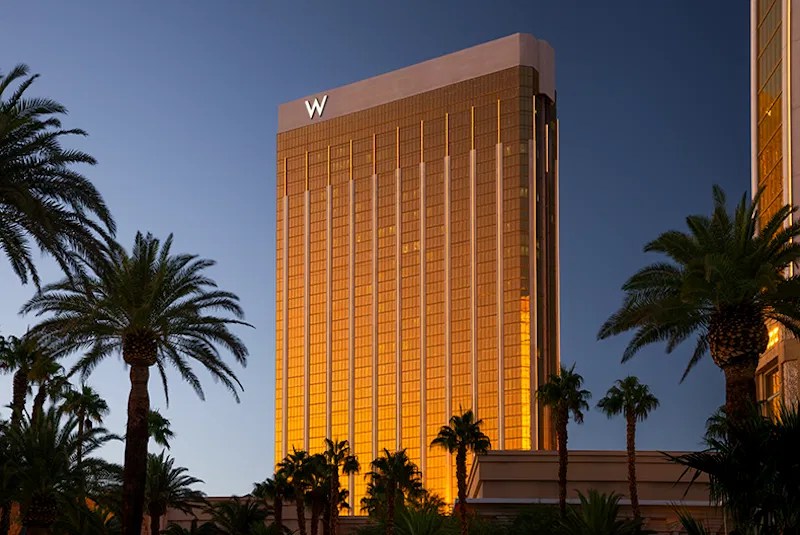
Rebrands in Vegas are pretty common these days. We have seen the Monte Carlo become Park MGM, Bally’s become Horseshoe, and most recently, Mirage transforming into Hard Rock Las Vegas. (If you are interested in the Hard Rock conversion, check out our blog post on that). And there is yet another change coming to Las Vegas and no we are not talking about the As or Bally’s here. Instead, we are going to be focusing on the most recent news of the Delano being converted into the W Las Vegas.
Join us in today’s blog as we take a deep dive into the history of this property and all the changes that are coming within the next few years. So without further ado, let’s get to it!
History:
Thehotel as pictured in 2003 shortly after opening.
Before we dive into and discuss all the changes coming, let’s first take a look at a brief history of the Delano. The hotel originally opened as the THEhotel at Mandalay Bay and was built as an all suite hotel tower meant to complement the Mandalay Bay Resort. It was designed to stand out with bold stylish design and high end finishes. TheHotel opened to much fanfare on December 17, 2003.
In August of 2012, MGM Resorts International announced the rebranding of THEhotel into Delano Las Vegas as part of a partnership with Morgans Hotel Group. Through the deal, MGM would manage the hotel under a licensing agreement with Morgans Hotel Group, which owned the Delano brand. All of the suites at the hotel were to be redesigned, along with new bars, lounges, restaurants and nightclubs.
Although THEhotel had been financially successful, the decision to renovate and rename it was part of a transformation at the Mandalay Bay. In addition, there had already been plans to renovate the nine-year-old hotel tower prior to forming a partnership with Morgans Hotel Group, which had been expanding the Delano brand.
Delano Las Vegas officially opened with a ribbon-cutting ceremony on September 2, 2014. Flash forward to 2024, The Delano Las Vegas is getting a complete transformation and will officially be rebranded as W Las Vegas as part of the new MGM and Marriott partnership.
This collaboration between two trusted hospitality brands means more than 200 million Marriott Bonvoy members can enjoy unique benefits and redeem points at MGM Resorts’ destinations while MGM Rewards members can status match and receive member benefits at Marriott’s global portfolio of approximately 9,000 properties.
Ironically enough, this is not the first time the W brand is going to be in Vegas as there was previously a W Hotel in Las Vegas from 2006 to 2009 and 2009 to 2017.
W Hotel Las Vegas (2006 – 2009)
The W Hotel Las Vegas in its earlier incarnation actually opened in 2006, but it wasn’t a standalone hotel at that time. Instead, it was part of the Las Vegas Sahara Hotel and Casino property, which was undergoing a significant renovation.
The W Hotel was essentially a brand overlay within the Sahara’s renovation efforts. This was not a complete transformation but rather an infusion of W’s style and luxury into the existing Sahara property.
W Hotel Las Vegas (2009 – 2017)
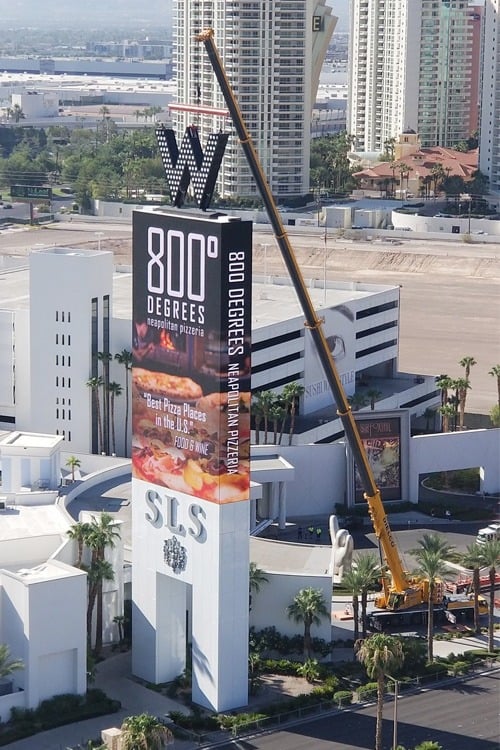
Crews remove the W branding and signage outside of the SLS, soon to be renamed to the present day Sahara Las Vegas.
The W Hotel was located within the CityCenter complex on the Las Vegas Strip. It opened in 2009 as a full-scale, standalone hotel with its own identity, separate from the Sahara property. By 2016, it was operating under the same brand and offering the trendy, upscale experience the W brand is known for.
This version lasted until 2017, when it rebranded as part of the larger Sahara Las Vegas operation, ultimately ending W’s presence in Vegas.
What’s Changing?
Rendering the new W Hotel Las Vegas expected to begin renovations in early 2025.
While there is little details known about the exact timeline or details of the project publicly available at this time, we can definitely say the hotel is going to go through a renovation and conversion process to meet the W brand standards. The W brand is known for its bold, trendy, and youthful vibe, so expect a lot of style, art, and an Instagram-worthy atmosphere throughout the property. It’s a bit of a shift from Delano’s more subdued luxury, so it’ll be interesting to see how the two compare once the dust settles.
It’s worth noting, as with Delano, W Las Vegas will not have a casino but will still have access to the Mandalay Bay Resort and its casino floor.
Final Thoughts:
I think it is going to be interesting to see the W brand finally return to Vegas after a lengthy absence. It is interesting to think about why Marriott, another company or a developer did not try to bring a W hotel back to Vegas sooner. I think it is sad the original W Hotel had a relatively short lifespan before being rebranded. I truly think if the original W was still there today, it would have done very well all these years and would have become a Vegas landmark for luxury and lifestyle.
With that being said, I can not wait to see what the new W Hotel has in store for Vegas and I think it is going to fit right in. W is known for appealing to luxury travelers, and a younger, trendier crowd. I think with the well throughout high end design, experiences and amenities, it would have no problem appealing to that type of crowd.
I personally can not wait to see all the renderings and announcements about what the property is going to look like post conversion and am very excited by this news. I have no doubt that the W will bring fresh energy that is sure to turn heads on the Strip. I think this is going to be the first of many new hotels and or branding deals we will see from MGM and Marriott. I can see this being a trend going forward with other casino operators, not just in Vegas, bringing in luxury hotel brands to supplement their offerings they already have.
We’ll keep you posted with any new details as the renovation gets underway, but in the meantime, it’s time to start thinking about what’s next for this exciting new chapter in Vegas history!
If you have been following along with my Touristician Reviews series where I recap my travels, you may have noticed a recent trend in my hotel recaps. Almost every time I travel somewhere whether it was to Detroit, Richmond, or Lancaster County, I always stayed at a Hilton branded hotel such as Tru, Hampton Inn, and Home2 Suites. In general when I travel, I always look for a Hilton branded hotel as it is always reliable, consistent, comfortable and clean.
So when I found out one of my favorite Hilton brands, Hampton Inn is getting a refresh, I knew I had to take a look at the design. In this post, I will be going over the redesign, comparing it to the current prototype Hilton and sharing some of my thoughts on the new branding and design. So without further ado, let’s dive in!
Going through the press release, we can see there are a few key points Hilton is aiming towards with this branding update. Those being:
Refreshed brand identity with an updated logo, new branding, and focusing on what makes Hampton unique as a brand.
Redesigned guest spaces and a move away from a traditional lobby set up allowing for more spacious and open room design.
New guest rooms with a focus on utilizing space and decluttering rooms by using less furniture pieces.
Emphasis on smarter more efficient design allowing for operational efficiency and cost savings for operators.
Keeping the well known and loved exterior design only slightly tweaking the colors, finally adding outdoor space and modifying the entryway.
Initial Thoughts
Overall, I love how they kept the existing exterior design they have and just added to it. Although nothing is ever going to replace the traditional exterior design. I really love how they added an outdoor patio space to the design as this is something I noticed Hampton has been lacking for a while. When I stay at Home2 Suites or Tru I love the outdoor spaces they have, especially at night for relaxation just before bed. Although, I’m not sure if it is just the way the concept art shows it, but I think it is odd how the patio is literally next to the front door where cars pull up. I personally would rather see it moved to the back of the hotel away from the front entry like how Tru is. That or I’d like to see some more separation. However, I do recognize this concept art and the actual prototype may vary once it is rolled out.
Moving on to the lobby, I personally have mixed feelings about this design. I like how the retail market is moved out and is not stuffed in a corner or buried in the lobby. I feel like this helps contribute to that open air, large space design Hampton wants. One thing I dislike though is the seating area/community area. I feel like the furniture gives the space a dated feel and doesn’t really remind me of how a Hampton would be. Again I get this is just concept art, so we’ll have to just see how this actually turns out when the first location using this design opens.
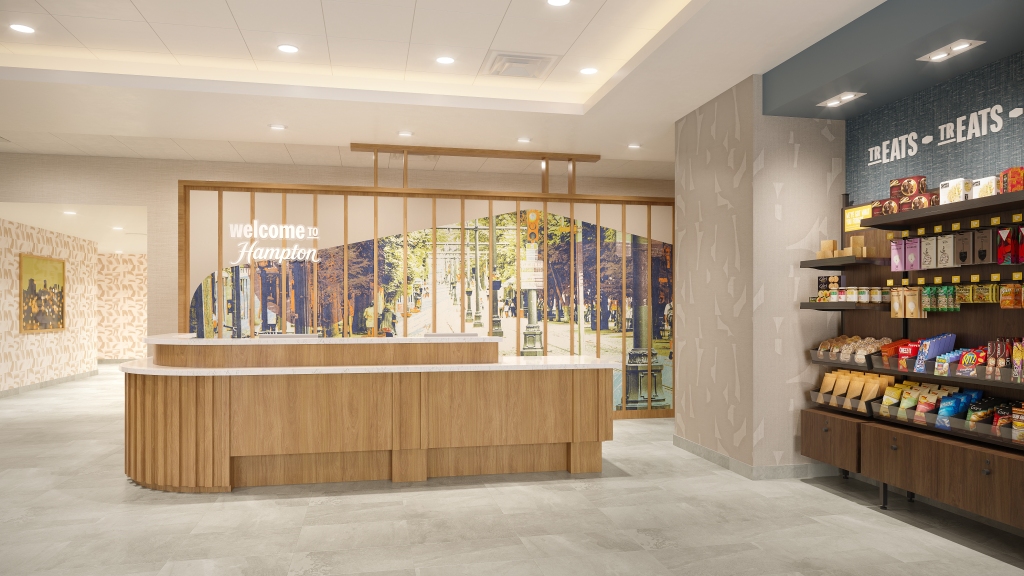
Looking at the front desk, I like how it is not a cramped work space and has branding behind it. Although, I do have to say I wish they stuck more with the little greeting phrases on the walls they use now like “Welcome to the Garden State” or “Welcome to the BuckEye State”. I do have to give the design props though cause they did somewhat incorporate that in the foyer as we saw from the video. Personally, I’m not a fan of how lite the wood tones are since I feel like they clash with the darker wallpaper accents. I’d much rather see more of a walnut or brown toned wood instead since I feel like that is more consistent with the current new builds and design that is currently rolled out.
New welcome wall at foyer entrances in the new prototype design.
Room wise, I have mixed feelings and a few concerns with the new prototype. This redesign is meant to fit more rooms within the existing blueprints for new builds which means smaller room design. This concerns me as I do not want to see room sizes similar to Tru being implemented. Generally if I am only doing an overnight or two nights, I prefer Tru since it is a smaller room and generally I am just looking for a comfortable place to sleep without fuss. However, when I look to book a Hampton, generally it is for multiple nights so I prefer a little more space and do not want as small of a room. I’m personally not a fan of this design for a variety of reasons:
Lack of a closet space. I totally understand wanting to open up the space to make it feel less cramped but I dislike not having a closet. While I like this closet set up for a Tru, I feel like it doesn’t fit as well with the Hampton design and will be a move away from what Hampton rooms are known for.
I’m personally not a fan of the light wood tones since I feel like they clash with the color scheme of the room. I like the colors of the room since I feel like those are classic Hampton colors but the furniture just feels out of place to me. I personally would have the existing walnut colored furniture and fixtures in the room since I feel like they fit better and are already pretty streamlined. I feel like this furniture is too similar to that of Wyndham and it takes away from what makes Hampton Inn unique.
Another thing that alarms me, is in the press release, they mentioned a bathroom redesign. I surely hope they improve on the current bathroom design. Personally, I am sick and tired of seeing a lack of thought go into towel racks or towel hooks in hotel bathrooms. I personally like to sometimes reuse my towels for a few days before getting fresh ones. However, this is often complicated when there are only one or no hooks or towel bars. I would like to personally see sliding glass shower doors instead of curtains in the shower stall. I am starting to dislike shower curtains because you can’t tell if they are clean or how often it has been cleaned whereas with glass doors, you can actually see the steak marks and it is way easier to tell if it has been cleaned.
Current Vs New Branding & Design
Along with the refreshed hotel design comes the newly updated marketing and branding. I have to be honest here, and say I am thoroughly surprised and delighted with all the updates. Looking at the logo, I love how they kept the logo almost the same and added little touches like connecting the font together between the p and t and just modified the colors slightly. I was honestly nervous like most modern day rebranding, that the logo would be butchered and look so cooperate looking. However, this was definitely not the case here and I have to say Hilton hit it out of the park on this one.
The logo was not the only thing that received a much needed face lift. We also see the new branding and marketing materials that were a part of this brand refresh. I love how they kept those iconic mustache coffee cups and really took that idea and elevated it to the next level. I also love how they took the iconic waffle breakfast that the chain is known for and focused on that for billboard advertisements along major highways and high traffic areas.
When I was looking at all the new marketing materials, I noticed a few subtle things that stick out. First, when I was looking at the renderings for all the new promotional items, I see the Hampton Inn Memphis-Poplar is listed on the business card renderings. If you look up this location, it appears as though this location is due for a renovation. Is it possible the first roll out of this design would be in the Memphis-Poplar location?
Yet another thing that sticks out is in the newspaper ad rendering, you can briefly see a variation of the new design with a slightly different color scheme. Is it possible there are going to be variations to this new prototype design depending on the location of the hotel? Honestly speaking, I prefer the blue color scheme pictured since that feels more like Hampton Inn to me.
Final Thoughts:
Overall, I think these changes are mostly positive for guest experience and for operators to ease the burden in day to day operations. I can’t wait to see this new prototype rolled out and see the end result. I am never usually disappointed with Hilton branded hotels, and I can’t wait to stay in one of these new hotels one day. Personally, if I was ever to open my own hotel, this would be one of the brands I could consider going with based on my experiences, and my stays with Hampton Inn.
What are your thoughts on the new Hampton Inn redesign and updates? Let us know in the comments below. As always if you are enjoying our content be sure to subscribe and follow us on social media to never miss blog updates and any new posts. We’ll see you in the next one!
Ever since its creation McDonald’s has always been an innovator in the industry from the first walk up counter, to the creation of new foods like Chicken Nuggets and more. To this very day, McDonald’s is very well known for fast, convenient, affordable and consistent food. While they do serve breakfast and coffee, have you ever thought about McDonald’s as solely a coffee shop? Well now you officially can!
In 2023, McDonald’s began teasing it was creating a new restaurant concept centered around nostalgic mascots and beverages. Flash forward to late 2023, McDonald’s made a huge announcement that shook the entire internet and decade fans of the chain. It was actually opening its new concept and naming it CosMc’s.
So what exactly is CosMc’s and what is all the buzz about? CosMc’s is a new small-format, beverage-led concept whose menu is built around bold, refreshing beverages and tasty treats that are “truly out of this world”.
In a press release, McDonald’s described its new concept by saying it “seamlessly blends brand-new, otherworldly beverage creations with a small lineup of food, including a select few McDonald’s favorites – all designed to boost your mood into the stratosphere, if only for a few moments”.
As we can clearly see from several press releases, it is clear McDonald’s is getting creative with a space/universe theme and branding the new restaurant as part of the McDonald’s Universe. I think this is a very clever way to brand the restaurant and is highly creative. It reminds me how superhero shows are now when the shows and story lines are in the same “universe”.
Taking a look at the menu, we can see the menu is heavily centered around beverages, coffees, specialty drinks and smaller pick me up food items. Examples include Sour Cherry Energy Slush, Tropical Spiceade and S’mores Cold Brew. Much like Dunkin or Starbucks, the chain also offers addons for drinks like popping boba, flavor syrups, energy or Vitamin C shots, and so much more.
Food wise, we can see the menu is very streamlined and only features two sandwiches, lots of baked goods, ice cream (hopefully the machines actually work…). The menu also offers a few classic McDonald’s classics such as the Egg McMuffin sandwiches and the M&Ms McFluffy.
Considering this is supposed to be competition to Starbucks, I have to say I was expecting to see more new sandwich options or possibly some wraps. Seems as though many of the items are recycled from McDonald’s and there are not as many new offerings. Perhaps since this is a test run, the menu will grow in the future once the concept takes off. I can not see this chain even trying to compete with Starbucks with the limited food menu it does have. Hopefully we’ll see a few more options added or at least some seasonal menu items introduced before the concept expands further.
CosMc’s is starting small with its first and only location as of now in Bolingbrook, Illinois. By the end of 2024, 10 additional locations are planned for the Dallas-Fort Worth and San Antonio metro areas. The company hopes to grow this number if all is successful with the test pilot locations.
I am very glad that they did not decide to go full on boring and go with McCafe which is their current in house coffee concept some locations have. I am glad they are branching out and trying something new. It’ll definitely be interesting to see what happens with the McCafe concept if CosMc’s really takes off. Could we maybe see co-branded CosMc’s and McDonald’s locations soon? Only time will tell!
Within the past two years, we’ve seen an explosion of new hotel brand development and rapid advances in the way we travel. One of those new found changes is extended stay hotel brands such as Home2 Suites, Residence Inn, Hawthorn Suites, Hyatt House and more.
An extended stay hotel offers guest rooms with larger living spaces, kitchenettes and additional amenities you wouldn’t find in a traditional hotel room. These types of hotels are aimed at travelers or guests staying for longer periods of time while offering the comforts of home.
Extended stay hotels are nothing new to the industry, and have actually been around for several decades. During and after the pandemic, extended stay hotels have grown rapidly and quickly became the fastest growing segment in the hotel industry.
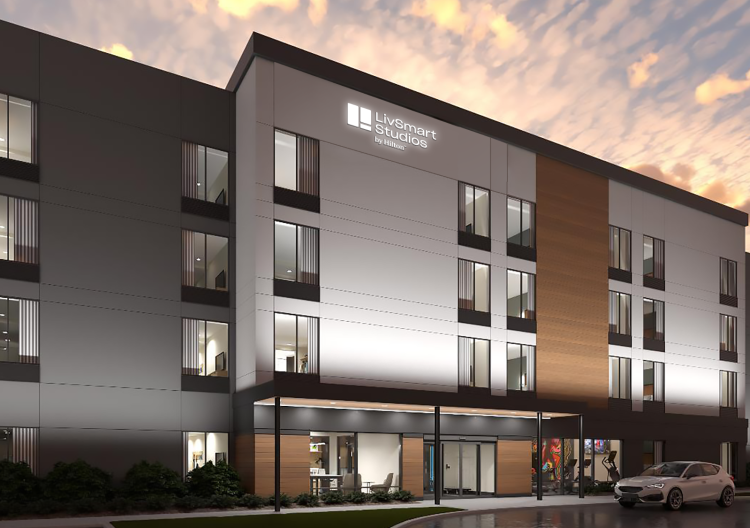
With all this new found expansion and an already crowded hotel market, brands like Marriott, Hilton, Hyatt and even Wyndham have developed new brands to capitalize on the growing market and expand their reach. In today’s post, we will be taking an in-depth look at some of these newly created brands, how they plan to differentiate themselves and what we can expect as consumers from these new brands. First up, LivSmart Studios by Hilton!
LivSmart Studios by Hilton:
Back in May of 2023, Hilton teased it was in the process of developing a new extended stay hotel brand with Project H3.
“After much anticipation, we’re thrilled to announce that LivSmart Studios by Hilton is official,” Isaac Lake, brand leader of LivSmart Studios, said in a statement. “With a resilient $300 billion workforce travel market, the extended-stay segment continues to grow. It has never been as primed as it is now for this long-stay brand, and we’re thrilled with the initial excitement we’ve received from owners.”
LivSmart Studios by Hilton will be aimed toward travelers and guests looking to spend about 20 nights or more at a time. Each location will feature communal common areas such as fitness centers, laundry areas and outdoor spaces with grills as well as fire pits. Hilton previously announced there would be free breakfast with grab-and-go items.
Rooms will be designed and furnished like Apartment-style studios. Each will feature fully-equipped kitchens with full-size refrigerators, dishwashers, microwaves, two-burner stove tops and plenty of storage. Multipurpose furniture in the guest rooms will create versatile spaces for working as well as relaxing and, of course, sleeping
It is reported that the first location should be open for business by the end of this summer in Kokomo, Indiana.
StudioRes by Marriott:
Prior to Hilton announcing Project H3, Marriott announced Project MidX Studios, another extended stay brand it would be adding to its 30+ brands. For context, Marriott already has four extended stay hotel brands, including:
Residence Inn by Marriott, where all rooms are suites and feature kitchens, with complimentary breakfast and an evening happy hour.
TownePlace Suites by Marriott, where rooms range from studios to two bedroom suites, and feature kitchens; Marriott describes this brand as being for “the Upbeat Realistic traveler”.
Element by Westin, where rooms range from studios to one bedrooms suites and feature kitchens, with complimentary breakfast and an evening happy hour; this is typically higher end than Residence Inn and TownePlace Suites
Marriott Executive Apartments, which is the closest thing in Marriott’s hotel portfolio to an apartment-style accommodation
Looking at the StudioRes design, it shares similarities to that of Hilton’s design however, I personally feel this design is very bland and slapped together for the sake of it. Marriott seems to be aiming at attracting more owners/operators with a cheaper startup and operational brand rather than improving on a niche market concept that can benefit potential new guests.
StudioRes will have a focus on the United States and Canada, with the most affordable cost-per-room product for developers, intended to accelerate speed-to-market, with a low cost to build. For a property with 124 keys, the model targets a build cost of $13-14 million, with around 54,000 square feet of total building area. The brand will also have a light operational cost model for owners and franchisees, meaning you can expect these hotels to not have many amenities.
Comparing this to the previously discussed Hilton design, I feel as though the Hilton design is way more put together and actually feels more detail oriented, has that service standard Hilton is known for and is overall a better concept. I feel like this concept is just pinching pennies and could honestly use more time and effort in development. Just looking at the concept art, it looks very rushed and slapped together. The exterior rendering doesn’t even look like a hotel at all. Plus why is there no bathroom rendering? Does this mean we are going to get a cheaply slapped together bathroom?
On many online threads, there are several loyal Marriott guests commenting on the company’s massive growth and inability to balance between developing its newer brands and keeping its older brands afloat.
“I get that the big hotel companies need a lot of brands to justify growth. But what happens to the old brands? I don’t see anyone really building and opening new Alofts anymore. That brand seems to be just existing. I stayed at the Aloft in Wichita last year. It felt like walking into a W property circa 2006. It was a hip concept back then, but felt very dated and just completely out of place in Kansas. What about Four Points? Is anyone really building and opening new Four Points properties? I actually think that Four Points is a better brand than Courtyard but Courtyard seems to be what developers want to build when they want something more than a Fairfield but something less than a more upscale brand. At some point, Marriott has to discontinue old brands and convert existing properties to something else. I’ve noticed that a tremendous number of 1970s and 1980s Marriotts have become Delta in recent years”.
Overall, I have to say I am extremely disappointed with their concept and effort they put in. Considering Marriott wants to create a concept for extended stays for 20+ room nights, their concept doesn’t stand out or incorporate anything innovative or new. I personally think this is very lazy and sad since the company is well known from the start for being innovative and groundbreaking when it comes to hotels. I just don’t see that from this concept at all. Marriott already has Marriott Executive Apartments and those are lightyears better. You would think you would want to top that concept especially if you want to create a whole new hotel brand from it. I just don’t see how Marriott, who is known for high standards and the details, is okay with this concept.
Hyatt Studios:
Before we get into Hyatt’s new brand, a quick note, compared to the previous two concepts, this concept is a more traditional extended stay brand not an apartment style, long term stay brand. Hyatt announced its new brand in April of 2023, in order to grow the company’s portfolio, guest base and tap into this new found exponential growth of extended stay hotels.
“We are proud to launch the Hyatt Studios brand and bring the high-quality experience and level of care promised by the Hyatt brand to smaller markets and submarkets where we don’t have Hyatt hotels,” said Jim Chu, chief growth officer, Hyatt. “We identified a white space for Hyatt, creating a compelling opportunity to significantly accelerate our industry-leading net rooms growth, care for World of Hyatt members on more stay occasions and introduce World of Hyatt to new guests in a new segment which we expect will drive increased direct bookings for all properties across the Hyatt portfolio.”
Guestrooms will marry form with function and offer suites with kitchen amenities to provide comfort during extended trips away from home. The Hyatt Studios food and beverage experience will include a complimentary grab-and-go breakfast and a best-in-class, 24-hour market with a wide variety of options to satisfy extended-stay guests – from health-conscious snacks and ready-made meals to sweet and savory staples to fulfill travel cravings, all of which can be prepared and enjoyed in the guestroom’s kitchen featuring a multi-function convection microwave.
One major thing that sticks out for me is how Hyatt states “the brand is designed to be flexible based on developer needs”. Personally, I feel a brand should be designed for the guests experience, efficiently and ease to operate. Basically, what I’m getting out of this is there will be little to no form of brand standards.
The specific relevant content for this request, if necessary, delimited with characters: Room design wise, much like Marriott, it seems very slapped together and bland. There is no pop of color or anything exciting to draw you in. While I get a kitchenette takes up a lot of room, why does it seem like the kitchen is weirdly placed in the middle of the room? Seems like they took a standard Hyatt room and slap a kitchen inside with a tiny closet. If this is supposed to be an extended stay brand, why does it lack storage options? Is it possible they just forgot that detail in the rendering or is it totally forgotten? Also notice how we don’t even get a rendering of the bathroom? Does this mean we are going to get a cheaply slapped together bathroom?
Final Thoughts:
One thing that is an immediate red flag for me as well is despite being different concepts, all three of the exterior renderings all suspiciously share the same color scheme and similar design.
Despite this, I personally think the Hilton design is the most throughout, detailed and most guest oriented. Seems like Hilton is more focused on the guest experience instead of putting the developer first. While I get designing a new hotel prototype to minimize the start-up and operational costs makes sense, it shouldn’t be at the guest’s expense. This is just one of the many reasons Hilton always wins me over compared to Marriott, Hyatt and IHG.
It’ll definitely be interesting to see how each of these brands expands and grows as time goes on. Will these concepts be well received or will there be massive changes made? Only time can tell.
In the hospitality industry, facilities are omnipresent and serve as the backbone of all our operations. They facilitate various activities ranging from hosting events and preparing meals to providing comfortable accommodations for guests. Furthermore, they support behind-the-scenes tasks that ensure the smooth functioning of the hotel. Within the hospitality industry, facilities encompass a wide range of spaces including hotel rooms, restaurants, meeting and convention areas, parking garages, and recreational facilities such as pools, spas, waterparks, and gyms. Additionally, they encompass essential equipment like stoves, fryers, washers, and dryers, as well as the building infrastructure that houses vital elements such as water, gas, electricity, and structural components.
Why Preventive Maintenance Matters:
It is crucial to maintain, repair, and design our facilities correctly; otherwise, the consequences can be disastrous. When we fail to do so, we often see disasters like fires, building collapses, gas leaks, power failures, floods, and more severe natural disasters occur. While most of the time we have control over weather-related disasters, there are cases when we have zero control over disasters happening. Such cases include natural events like earthquakes, hurricanes, forest fires, and tornadoes.
It is crucial to prioritize the prevention of disasters by exercising meticulous control. One effective approach is to employ preventive and corrective maintenance strategies, carefully examining blueprints during the design phase to eliminate any critical errors. Moreover, seeking advice from experts during the maintenance and design processes ensures adherence to best practices.
By neglecting the aforementioned maintenance practices or neglecting to review the blueprints, it can lead to significant catastrophes and endanger the lives of innocent individuals and nearby properties. As we shall observe through various examples, a majority of the disasters documented could have been prevented had proper maintenance been conducted, blueprints been reevaluated prior to commencing construction, and appropriate safety measures been implemented.
Hotel Fires:
Facilities fires in the hospitality industry are a disaster that can be controlled with proper measures. Neglecting maintenance, emergency procedures, or safety equipment can lead to dire consequences. Fires occur when there is an ignition source, fuel, and oxygen. In the context of a hotel room, where numerous flammable sources can be found, items such as towels, sheets, blankets, desks, curtains, and furniture can easily fan the flames and escalate the situation to a point of no return.
So, when a fire occurs in a hotel, it is crucial that our fire safety plan and equipment are effective and efficient in aiding during an emergency. The most important elements of a fire safety plan include, fire detection followed by fire notification. Fire detection includes human observation, heat detectors, photoelectric smoke detectors, ionization smoke detectors and sprinkler systems. Meanwhile fire notification includes emergency instructions and floor plans, building horns/alarms, voice alarms, visual alarms, communication systems, and smoke detectors. Additionally, if a fire does break out, fire control is very important and includes the following smoke dampers which inhibit the movement of smoke through ductwork, smoke sensors that control smoke dampers and a stairwell pressurization system that increase the air pressure in stairwells keeping them relatively smoke free.
MGM Grand Fire:
Looking back to 1980, the MGM Grand Fire was the deadliest hotel fire ever to occur. According to several reports and investigations, it was found the fire began around 7:10 a.m. Upon further investigation, it was discovered that the casino floor did not have sprinklers or any fire suppression systems which ultimately caused the entire casino floor to be ravaged by fire in six minutes (Fascinating Horror, 2021). It was also found that as fire and smoke quickly rose up the hotel tower, no early warning systems were present and fire alarms or safety systems were not functioning to warn guests before it was too late. By the time the guests in the tower found out there was a fire, it was too late which caused many to be trapped in their rooms and on the upper floors of the tower cut off from exits entirely. This disaster unfortunately took the lives of 87 people and injured more than 600 (Verastigue, 2022).
To begin with, this disaster could have been avoided if the bakery case that caused the fire was maintained properly. If there was preventative maintenance being done, perhaps the (reason case sparked) could have been spotted and fixed. Additionally, had there been proper fire detection, warning and suppression systems, the fire could have been contained sooner and tragedy could have been prevented.
Building & Facilities Collapses:
While we have control over fires and the outcomes in our facilities, unfortunately when collapses occur, we tend to have less control over them due to the fact that most problems that cause collapses occur in the design and construction stages. If we are the ones designing and constructing the facilities, we have control over collapses. Whereas if we are utilizing an existing facility, we will not have control over the design of the facility and its infrastructure. Most collapses can be prevented if blueprints, designs and technical drawings are checked again before going to the construction phase. It’s when we fail to do this simple yet easily overlooked step, that we see incredible building collapses as results of engineering failures.
Hard Rock New Orleans Collapse:
Unfortunately for the under construction Hard Rock New Orleans, they learned this mistake the hard way after it was too late. It was a beautiful and normal day just like any other day until tragedy struck and Hard Rock came crashing down onto the street below. Work was being done on the upper floors where concrete was being poured for supports as well as the structure making up the floor. Additionally, work was being done on the 18th floor where the pool was hoisted up by crane only hours before. Suddenly without notice, the under construction hotel collapsed killing three workers, and injuring hundreds both on the job site and street below. Immediately, the public demanded answers as to why the hotel collapsed and the cause of the incident.
In the aftermath of the incident, it was discovered by OSHA that the engineer “failed to adequately design, review or approve steel bolt connections affecting the structural integrity of the building” (OSHA, 2019). Additionally, Walter Zehner, a technical spokesman and structural engineer commented “You can see where the two upper floors are moving kind of together rather than individually and that indicates that the 16th floor failed and the other floors just came down with it” (Hammer, 2021). It was found the building was so un-structurally sound that many of the steel beams were overstressed by 300%.
Hyatt Regency Lobby Collapse:
Sadly, a similar tragedy occurred at 1981 Hyatt Regency Hotel in Kansas City where an elevated walkway collapsed, killing 114 people and injuring 200 more. The lobby area featured a three tiered elevated walkway that took guests across the resort to different meeting spaces and guest areas. During an investigation launched directly after the incident, it was found that a change in the original design of a series of walkways suspended above the lobby’s hotel led to a connection failure. The original design had all of the walkways suspended from the ceiling with steel rods retained by nuts. Even prior to the design change, the original design only supported 60% of the minimum load required by the Kansas City Building Code. The contractor responsible for manufacturing the steel rods objected to the use of threaded steel rods, as they felt the threads would be damaged during construction. They proposed an alternative plan where the lowest platform would be supported on one end by the ceiling, but on the other end by an upper level platform. This of course left the upper level platform, already under-designed, with a double load (Tyrell, 2020). Much like the Hard Rock incident that occurred recently, this incident in 1981, could have also been prevented by simply double checking blueprints, designs and technical drawings before starting the construction process.
Tropicana Parking Garage Collapse:
Similarly, back in October 2003, the Tropicana Casino and Resort in Atlantic City also had a collapse. During a major expansion and renovation project, the resort was constructing a new parking garage to be able to hold the higher capacity of guests entering the resort. Unfortunately, while constructing the parking garage, it collapsed in on itself, killing four construction workers and injuring 21 others (OSHA, 2004). It was also discovered during the investigation that multiple reasons were to blame for the collapse. First, the contractor building the garage did not properly support the structure in areas where the concrete was being poured and cast for the supports. Secondly, it was found that the parking garage levels were beginning to show signs of cracking around major support columns and areas that were just freshly poured a week to a few days prior. “The Fabi superintendent failed to seek the immediate attention of the general contractor/construction manager or the structural engineer of record when Fabi employees brought to his attention the cracks around the exterior columns on grid line 1 at levels P4 thru P7. The employees noticed consistent cracks at the interior long face of the columns extending at an angle of forty-five degrees towards the edge of the slab/beam. These cracks should not have been dismissed as shrinkage cracks because of their uniformity, depth, and pattern on all levels. The collapse could have been averted if immediate attention was sought” (OSHA, 2004).
Much like the previous two incidents resulting in collapses, this incident also could have been prevented if the blueprints and technical drawings were double-checked for design flaws prior to construction starting. Additionally, had the engineer stopped to address the reported cracks and flaws that were discovered, the incident could have also been prevented by performing the proper work to address the issues and stop them from becoming more severe.
Final Thoughts:
To conclude, it is crucial that we maintain, repair, and design our facilities correctly; otherwise, the consequences can be disastrous. Our facilities in a hotel include hotel rooms, restaurants, meeting & convention spaces, parking garages, recreational areas like pools, spas, waterparks, and gyms, equipment such as stoves, fryers, washers, and dryers, and even the infrastructure of the building. When we fail to take proper steps and do maintenance, we often see disasters like fires, building collapses, gas leaks, power failures, floods, and more severe natural disasters occur. Most disasters we have full control over before they even become disasters. We can prevent disasters through preventive and corrective maintenance, cross-checking blueprints during the design stages to ensure no crucial errors were made, and consulting with experts when doing maintenance or design to ensure we are doing it correctly.
Support My Work: Buy Me A Coffee!
One last thought before we go! Are you enjoying the content I create? If so, I would greatly appreciate your support on my Buy Me A Coffee page.
By buying me a virtual coffee, you can help fuel my creativity and enable me to continue bringing you valuable content. Whether it’s blog posts, artwork, or any other form of creation, your support makes a significant difference in my ability to keep producing high-quality content.
Your contribution shows that you value what I do, and it motivates me to keep pushing the boundaries and exploring new ideas. Together, we can build a vibrant and supportive community around my work.
So, if you’re enjoying what you see and would like to support me, click the button above to visit my Buy Me A Coffee page. Your support means the world to me, and I genuinely appreciate it.
Thank you for considering supporting my creative journey. Your generosity is deeply appreciated! See you in the next post!
A few months ago, we looked at and discussed the rocky future Six Flags had with new leadership coming in and stirring up turmoil company-wide. Since then, there have been massive rumors circulating regarding the future of Six Flags. There was, at one point, talk about Six Flags selling off all their real estate to a real estate trust company while they kept operating the parks. Ultimately, this was pure speculation and rumors that never occurred.
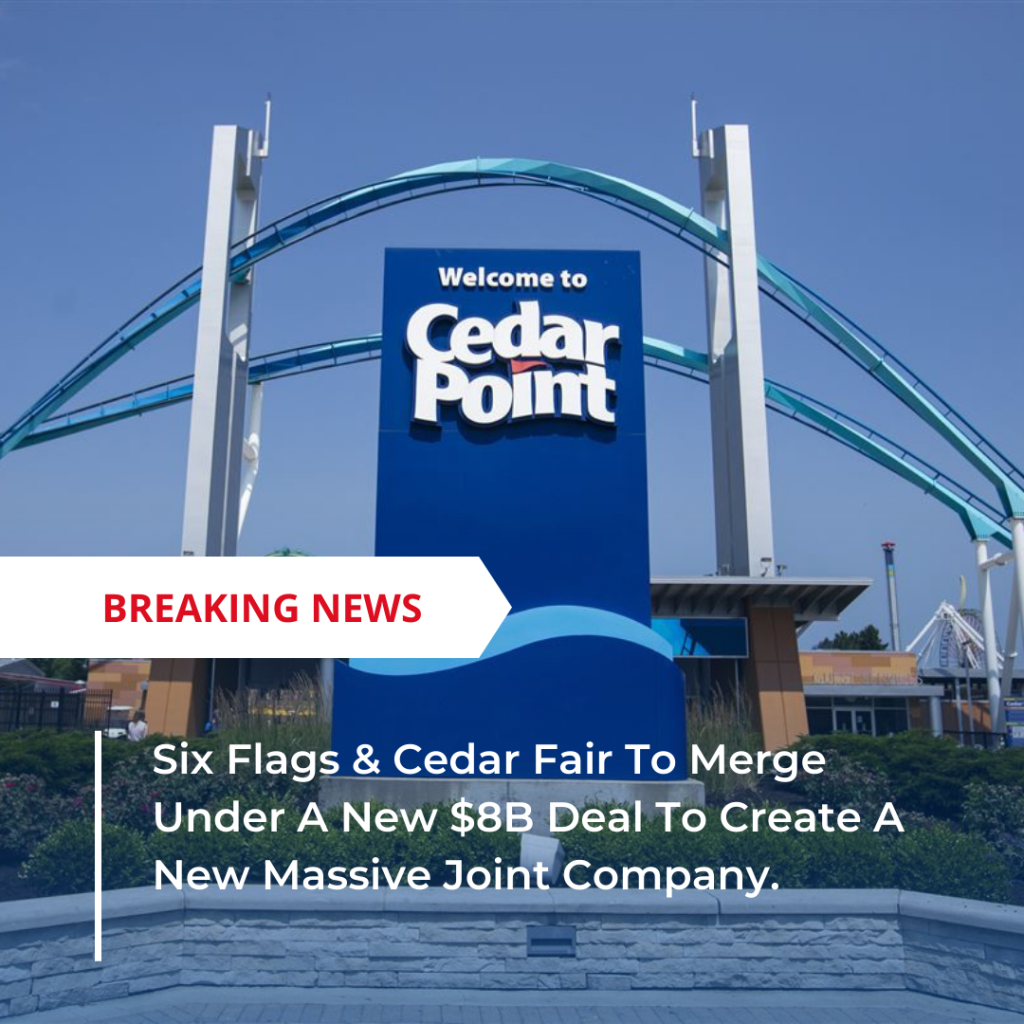
However, massive news just dropped in the theme park community regarding Six Flags and its competitor Cedar Fair. Under a new massive $8B deal, the two companies will merge to become one massive joint company. The combined company, which will operate under the name Six Flags, will boast 27 amusement parks, 15 water parks and nine resort properties in the U.S., Canada and Mexico.
As the deal was announced early morning on Thursday, November 2nd, Cedar Fair CEO Richard Zimmerman gave the following remarks:
“Our merger with Six Flags will bring together two of North America’s iconic amusement park companies to establish a highly diversified footprint and a more robust operating model to enhance park offerings and performance”.
Under the new leadership structure, Zimmerman will be president and CEO of the combined company. Meanwhile, Selim Bassoul, President and CEO of Six Flags, will become executive chairman.
While I am personally very skeptical about Selim Bassoul and the Six Flags leadership, I am very glad that Cedar Fair is taking control of the leadership while Six Flags is the brand and providing support to Cedar Fair.
When you compare the two companies, Cedar Fair is the better and stronger company out of the two. Cedar Fair focuses a lot more on quality compared to Six Flags where the emphasis is on quantity. I think Cedar Fair could definitely improve the Six Flags parks by a lot, with their higher standards, attention to detail, heavy theming and minimalist in park advertising approach.
One major benefit that would come with this merger, is both operators will have access to each other’s intellectual property brands such as DC Comics, Looney Tunes and Peanuts. One thing Cedar Fair lacks is themed attractions centered around a character or movie. By having access to the DC brand, it would allow Cedar Fair to step up and compete on a themed attraction level with the Marvel superhero rides at Disneyland and Universal Studios Orlando.
On the flip side, Six Flags struggles (in my opinion at least) with theming and creating attractions for children and a younger audience. Cedar Fair has the Peanuts brand and with it, they do a very good job creating some unique and well organized kids areas. I feel like Six Flags often overlooks or forgets about these kinds of areas/lands so with Cedar Fair bringing this to the table, it would be a huge win for Six Flags.
There is a huge push and hope from the theme park fan community that the newly formed company will create a new season pass program that would allow pass holders to access all 27 parks across the portfolio. I think this would be a smart idea since it would allow guests to experience the best that both operators have to offer. For example one could enjoy Cedar Fair’s top parks in Southern California (Knott’s), Ohio (Cedar Point and Kings Island) and also enjoy Six Flags’ top parks in Los Angeles (Magic Mountain), Chicago (Great America) and New Jersey (Great Adventure).
As it stands now, Cedar Fair-Six Flags will only have two overlapping areas in both combined portfolios in Southern California and the San Francisco Bay Area. This overlap will not remain for long however, as Cedar Fair has sold California’s Great America and the park will cease operating within a few years. After this, it would only have Six Flags Discovery Kingdom in the Bay Area market.
When asked about if there would be any potential closures or sales to any of the joint parks, Cedar Fair CEO Richard Zimmerman said on a call with investors that there are no plans to close any of the parks following the merger.
“These are irreplaceable assets. How do you grow if you shrink your portfolio?”
There are still so many questions and details to work out with this merger. I think only time will tell how well this merger goes for both operators and what will become of it. Keep in mind this was only announced on Thursday, November 2nd so there is not much additional information available. It is definitely going to be interesting to watch this merger further progress and unfold.
So, what do you think of this insane merger? Let us know in the comments below and be on the lookout for more YouTube videos and blog content coming your way soon!
























 Touristician