Overcoming Failure and Achieving Success: Personal Stories & Tips

In both high school and college everyone has their own journey, not one path anyone takes is the same. Some people are faced with challenges and fail while others have an easy time at success. The important thing is not about who you are and if you were successful or not. It’s how you respond to it. If you faced failure, did you simply give up or did you pick yourself up and keep going? If you were successful, are you keeping it going and still working hard or are you letting it get to your head? If you are somewhere in between or in a situation and aren’t sure what to do, it’s okay! In today’s post we will be covering how you can be successful, deal and cope with failure and I will also share my personal story of how I both faced failure and turned it around. 

Do Yourself A Favor & Stop Pressuring Yourself!

It seems from the very moment you enter high school as a freshman you are thrown a class book and told to choose what you want to do. There is so much pressure from counselors and teachers that you must choose. Even in college, sometimes there is so much pressure on us to choose a major and we are forced to make a decision quickly.    

Are you in high school or college currently and are in this same situation? Let me give you some advice: It’s perfectly okay to not know what you want to do for a career/major. Don’t let anyone pressure you into anything you don’t want. From personal experience, try different things and experience new things. By doing this, you’ll find what you are interested in and what you dislike. Keep doing this until you have that “ah ha” moment. 

The Lightbulb Moment A.k.a. The Ah Ah Moment:

So what is this so-called “Ah Ah moment” I’m talking about? As you begin your exploration and try new things, sometimes you get this feeling of excitement and you suddenly realize, said activity, career or major is for you! 

Everyone has these moments even if you don’t realize it. For example, I’ll tell you one of my key moments. At the very start of my freshman year in high school, there was such pressure for me to decide what I wanted to do as a career. I was given the class book and saw so many paths and I’ll be honest it was honestly overwhelming. I honestly had zero clue what I wanted to do and wasn’t sure what I was interested in. Originally I was in band ever since elementary school and was pumped to do it in high school. However, the requirements and scheduling conflicted with work and sports. I’ll be honest I was crushed and to be honest kind of lost. Band was a big part of me and I wasn’t sure where I could go from there. So what did I do? Well, like I said above, I opened myself to new things. In the class catalog I saw a class called Engineering & Design. It was this very class that led me down my path towards where I am now, well… sort of. 

I should mention, if you haven’t had your “ah ah” moment yet, don’t worry! Your moment is coming. Don’t try to force it. The more you try to force it, the harder of a time you’ll have in the long run. The best advice I could give you is to keep on going and let your moment come to you. Enjoy where life takes you!

Dealing With Failure & How To Cope:

No matter the situation, dealing with failure can be a severe blow to your morale and motivation. For the purposes of our discussion, let’s focus on failure in a learning environment. You can easily take the principles we discuss and apply them anywhere.

Remember nobody likes to fail or wants to fail. If you are currently facing failure or trying to cope with it, let me reassure you everything is going to be alright! Don’t panic, take a deep breath and just relax. I know it’s easier said than done. Trust me I went through a stretch of failure, I get the feeling and know it’s not easy. (More on this later) If you are in a real bind and don’t know what to do, lean on your friends and family as they can really provide some great insight and reassurance. As I mentioned at the start of the post, it’s not how or why you failed that’s important. It’s how you pick yourself up and bounce back. If you just give up and sulk in your failure, you’ll never get anywhere in life. Failure is a part of life. 

This reminds me of what a very wise and motivational Professor once told me during class one semester. She went on to explain that failure has such a negative meaning and there is such pressure put on us when we fail. Professor told us to remember the word fail means: First Attempt In Learning. Now, I know this sounds absolutely crazy, but she had a valid point. How else are we supposed to learn and grow if we never encounter failure? Not yet convinced? I don’t blame you, I wasn’t either at first but after looking at real examples of people who encountered failure at first then went on to be crazy successful, I was very convinced. Which brings me to my next point…

Look To Your Role Models:

Think about who you look up to whether it’s a family member, cultural icon, etc. I want you to think about this for a second. Do you think whoever it may be, became successful overnight? Do you think they ever not failed? Do you think they ever gave up? Take Walt Disney for example, once faced bankruptcy, mental health issues,  and even labor strikes. 

Walt Disney himself once said “It is good to have a failure while you’re young because it teaches you so much. For one thing it makes you aware that such a thing can happen to anybody, and once you’ve lived through the worst, you’re never quite as vulnerable afterward.”

Walt also explained his formula for overcoming failure. “To some people, I am kind of a Merlin who takes lots of crazy chances, but rarely makes mistakes. I’ve made some bad ones, but fortunately, the successes have come along fast enough to cover up the mistakes. When you go to bat as many times as I do, you’re bound to get a good average. That’s why I keep my projects diversified.”

Being Successful & Seizing Your Opportunities:

Everyone loves hitting big and being successful. But how do you become successful? To be honest there really is no correct answer. There is not one correct path or steps you need to take to be successful. Like I said at the start of the post, everyone’s path and circumstances are different. Everyone’s definition of success is not going to be the same because of this. Remember, success is what you make of it. It can be as small as finally getting straight As or as big as landing that dream job you always wanted. No matter your path or the circumstances, you need to be sure to take advantage of your opportunities as well as the tools you have at your disposal. For example, the company I work for currently, is very big on promoting within and teaching. With this, they offer lots of training and opportunities to learn everything I’m interested in and enthusiastic about. If you currently work for a company or employer who does something similar, be sure to jump on any opportunities and take the resources they offer you.

My Stretch Of Failure & How I Turned It Around

Originally, I began studying engineering and had the dream of working for Disney. I had the hope and dream of one day even starting my own park. So what happened? Well first let me say, I am not very good at math. Ever since elementary school, math was always a weak subject of mine. Despite this, I never failed a single math class in school. I always got As or a low B. Flashforward to college and I failed not just one math class, I failed two math classes! For my degree I needed to take Pre-Calc I & II, Calculus I, II, III & V. Yea it’s not as fun as it sounds, especially when math is your weak subject.

Right when I failed my first class, I was devastated and felt like giving up but then I stopped to remember my dream and what I wanted to do. I didn’t want to give up on my dream without a fight. The following semester, I retook the class I failed and not only did I pass with a B, I know the math a whole lot better. The next semester, I moved on to my next math class which was Pre-Calc I and yes you guessed it, I failed horribly. If I remember correctly, my grade was a 40 something. It was really bad! I didn’t fail out of not trying, there were a lot of factors that went into it, online class due Covid being one of them. (When it comes to math, I am a very visual learner. So math is easier for me in person with an instructor in front of me and where I can actually write things on paper). 

At this point, not only was I stressed and down on morale, I also was doubting myself. I kept asking myself “What’s the point”, “Why am I doing this” and even “This was all a mistake I should have never done this.” Remember how I said before, it’s not how or why you failed that’s important. It’s how you pick yourself up and bounce back that matters. 

I was faced with a very tough choice and it took a lot of thought. Did I no longer want to do engineering? Or Did I want to stick with it? After weeks of thinking and weighing my options, I decided to switch my major to Hospitality for a variety of reasons. First, besides failing math, the math in general was getting to be too much for me and was too stressful. I was only at Pre-Calc 1 and still had to do Pre-Calc 2 as well as Calc 1 – 4. I knew I didn’t want the stress of going through all that. 

Second, I was very good at the science part of engineering as that came easier to me. I was very into 3D printing, CNC machines, robotics, etc. I choose rather than have the stress of doing these as a career and taking the fun away, I wanted to keep these as hobbies or interests instead.   

Third and most importantly, I didn’t want to give up on my dream of eventually opening my own theme park or resort. Hence where the hospitality comes in. I was always interested in hotels and had a fascination for them. When I got my college courses catalog and saw this as an option, I always planned to have this as a double major down the road. 

So did I become successful? Well, Flashforward and here I am closing in on graduating with my Associates degree in Hospitality, working at an amazing hotel company learning lots and doing this blog! So yes, I would say I am successful! Want to know more about my day to day at the hotel? Check out my post What It’s Like Working In A Full Service Hotel.

I hope you all enjoyed today’s post and found it helpful! Until next time!

~Blake

What Happened To Creativity and Innovation in Disney?

Author: Blake

Welcome to the first ever Disney focused blog post! Back in 2019, I had to write a research paper about a topic I was passionate about and related to my major. For my paper, I decided to spot light the creative history Disney has had, a brief timeline of the parks and the current track record Disney has with its current leadership. While, I don’t consider myself a hardcore fan of Disney or claim to know everything about it, I wanted to share my thoughts and opinions I wrote. After revisiting this after some time, I definitely remember enjoying this paper and am glad I am able to revisit it again. So without further ado, let the magic begin!

*For easier readability, I removed the citations used throughout the paper. Please note not all quotes or facts are directly mine. I will link the sources I did use at the end of the post. Thank you!*

Photo by Benjamin Suter on Pexels.com

The Industry That Almost Failed To Exist:

“To all that come to this happy place, welcome. Disneyland is your land. Here age relives fond memories of the past, and here youth may savor the challenge and promise of the future…” (Walter Elias Disney). From the very start, theme parks were created as a place of fun and to escape the craziness of life. Creating a theme park to achieve these goals takes lots of creativity and innovation. Throughout the Walt Disney Company’s existence, creativity and innovation were core principles that Imaginners and leadership followed; however as of today those very same principles seemed to have disappeared and became lost within the profits of the company.

Back in the 1950s, the theme park industry was hurting and almost disappeared forever. When Walter Elias Disney came along, he took the failing American dream of what a theme park was and with hard work and innovative thoughts for the time, created what one knows today as Disneyland. Before Disneyland, Walt was an innovator in the making of cartoons and animation. He created some of the first cartoons in color and in sound. One day while spending time with his family at a local park and sitting on bench, a radical idea hit him. The idea of creating a theme park where adults and children can spend time together in a safe and comfortable environment. Fascinated with this idea, Walt set out with his brother Roy to create his vision. Walt purchased a 160 acre orange grove near Anaheim, California where there was nothing but orange groves and no major highways. The media criticized Walt saying he was crazy and it couldn’t be done. Regardless, Walt, the Imaginners and trades workers got the park finished and opened. Walt took all of his classic, well known characters and created rides using storytelling so that riders could connect to the characters and feel apart of the story. 

And So The Magic Began…

Walt didn’t just stop there with Disneyland. Throughout the years, he added to his park creating never before seen technology and elements in rides. To keep the park revelavant and market towards thrill seekers, Dick Nunis, who was the Director of Operations at the time, asked if the Imaginners could come up with something: “‘You’ll get your thrill show attraction. We are going to build a scale model of the Matterhorn and put a bobsled in it’. I had no idea what he was talking about. What Walt ended coming up with was a ride called the Matterhorn Bobsleds. Walt’s concept was having two tracks intertwining each other hidden inside of the mountain along with an opening in the mountain so that the SkyWay could pass through it. The designer of the ride had to learn extra math he never learned in high school just to be able to get the ride designed and its physics designed. The ride set the pace as the first tubular steel track roller coaster in the world. Other innovative ideas such as this came about like the It’s A Small World ride, the Monorail system which was the first ever monorail and Pirates of the Caribbean ride

The Legend Carries On:

While Disneyland was a huge success and in the process of completing these innovative projects, Walt’s health was declining due to lung cancer. When Walt died on December 15, 1966, the Imaginners who worked closely with him were devastated. Imaginners were worried about the future of Disneyland and what would be next since anything they worked on, Walt always gave feedback or worked with them on. Roy Disney took over the company and he and the Imagineers honored Walt by finishing all the projects Walt put forward before he died. Such projects include the Haunted Mansion and what would become Walt Disney World. It took a lot of innovation and creativity to solve the issues of sinkholes, swamp land,no roads and no utilities anywhere near the property. To combat this, the team put in all of its own utilities and roads and designed on ground level a network of tunnels to run all the utilities. The tunnels were also used for Cast Members to get around to the proper lands while in costumes without being seen by park goers. Don Iwerks,former General Manager of the Walt Disney machine shop recalls: “That was a major engineering job. It could run all the water systems, all the electrical systems and all heating systems all under this sort of roof.” The park featured mostly clones of Disneyland rides but also featured new and exciting experiences. One of those being Liberty Square which was themed after colonial America. After the park opened, it was clear all 30,00 acres of land could be further developed and Walt’s ideas would go on.

The Community Of Tomorrow:

Shortly after Walt Disney World opened to the public and became the companies second park to open, Roy Disney died. Imaginners still around from when Walt was alive and current Imaginners feared again what was to become Disney and didn’t know where the company was going next. Don Tatum who was Roy’s prodigy took control of finances while Card Walker who was Walt’s prodigy took control of the parks. The team under the leadership of Walker took Walt’s idea of EPCOT (Experimental Prototype Community of Tomorrow) which would be a futuristic utopian community with radical ideas never thought of or designed before and finally put it forward. Card Walker, the president of the company at the time gave the following statement about the project: “More than a dozen years ago Walt Disney outlined his belief that the critical problems facing the world can and will be solved by creative people who are both dreamers and doers. He called his dream Epcot.” They ultimately gave up on the society since they couldn’t control how people lived their lives and instead took the themes Walt had created and made attractions and themed areas (Pavillons) out of them. For example, Spaceship Earth showed the evolution and futuristic advancements of communications and how it shaped society. The fact that the Imaginners were able to come up with original attractions to orchestrate a specific theme is absolutely amazing. 

The Eisner Era & Revival Of Creativity.

Unfortunately, this creativery would be on the brink of collapse due to a battle of management and hostile issues at the corporate level. However when Micheal Eisner and Frank Wells took over the company, they ushered in a new era of creativity. Eisner before taking control of Disney was an executive at Paramount Pictures who helped take the studio on a legendary box office streak. From the very moment they took over, Imaginners feared that the dreaded day came where they would be getting shut down. To their surprise, Esiner loved Imagineering and respected them highly. Esiner loved Imagineering so much that he spent a lot of time there and really connected with the creative minded people he was interacting with on a daily basis. 

Throughout his time leading the company, Esiner took on many ambitious and creative projects. The first of these projects was a Disneyland park in Paris. Unlike the creation of Disneyland in Japan, which was an exact clone, the Disneyland being built in Paris, while still having the same rides, was visually and creatively different and unique. Disneyland Paris’s tomorrow land for example had a more steam punk look to it rather than the traditional futuristic space theme to it. Not only was the theming different the technology behind some of the rides was different as well. Unlike the other versions of Space Mountain that started with a lift hill followed by a drop, this version used a catapult launch system created entirely by the Imagineers. It was the first inclined catapult launch system ever built in the world. This system added a whole new excitement to the classic attraction while keeping to the original concept.

Another creative project that followed suite was a chain of complexes called DisneyQuest. The idea was instead of having to spending millions of dollars on creating a park in which would be profitable in 11 years, build a complex that would be profitable within a few years. DisneyQuest was a 5 story windowless building featuring multiple attractions, games and new technologies in order to give the Disney experience without having to travel all the way to CA or FL. Despite closing in 2015 and not achieving the plans for 30 regional locations, the concept and creativity with the complex where pretty amazing since it was something never really done before and was just emerging.

Cooperate Greed… Goodbye Creativity!

Unfortunately, this creative resurgence would not last and would soon come crashing down. Starting around 1994, Disney began once again cutting costs and corners. Tom Morris, a former Imagineering Creative Executive, recalls: “…There was a time where we were encouraged to forget who we were. We’re no longer gonna be a castle park company. We are entertainment, retail, dining, and real estate development and other things.” The most obvious examples of this was seen in the creation of MGM Studios in Paris and Disney’s California Adventure which would be the 2nd gated park in CA. DCA broke the formula to how Disney created parks since there was no natural divider keeping the park immersed in the theming and rides, there were fewer themed lands and fewer attractions. Kevin Rafferty, an Imaginnering Executive, reflects: “Much to our chagrin, it didn’t adhere to our fundamental design principles of theme park design”. Disney moved away from their core principles and with MGM Studios Paris and DCA focused on making one day park experiences to complete the main parks. When a legendary Imaginner John Hench was asked to complement on the creation of DCA he stated “I preferred the old parking lot” While some may argue in order to be innovative, traditions and formulas must be strayed away from, by Disney doing so they were not innovative as in some cases. Instead, Disney only broke their formulas to cut corners and try to get the Disney experience out there poorly executed. 

The Iger Era… Not Much Better?

Sadly, this creative slump and decline of innovation only carried on under Eisner’s leadership and Disney suffered. One of Disney’s major partners throughout the years, Pixar, ended their partnership with Disney. To add to the companies suffering, Roy E Disney, Walt’s nephew, resigned from the board of directors and sought to drive Einser out of leadership. Bob Iger took control of the company after Eisner stepped down as CEO of the company. What was thought to be a new start only continued the downward spiral of lack of creativity and innovation. 

While Iger tried to focus on trying to get core principal’s back, he only failed and is losing the core principles even more. A common example that is clearly seen in the present day of Disney is the overuse of IPs (Disney characters or property) on rides and attractions. For example, instead of creating new rides with new characters and experiences, the same characters that have been used already are used again. Another issue connected with this is the recycling an old ride and slapping a new IP on to it. If one takes a look at Pixar Pier in DCA, all it essentially is, is the old Paradise Pier rides with new characters and color schemes. While it can be argued, the conversion of Pixar Pier was innovative and creative since it used new characters and brought new concepts to that specific area to DCA to make it feel more like Disney, all Disney did was recycle the land and just re-theme it which is not very creative. For example, the old roller coaster California Screamin’ was converted into Incredicoaster with little changes done to it. All that was done to this ride was, tunnels where installed on the tops of the drops on the tracks and the ride was repainted to fit the theme for the Incredibles. Re-theming an entire land by just repainting it and slapping new names on rides is not creative or innovative especially with a company that has such a rich history with these two core ideas.

To conclude, Walter Elias Disney created Disneyland out of a vision where adults and children can spend time together in a safe and comfortable environment. To make his dream a reality he used radical, outside of the box ideas to make it happen. Walt’s vision only expanded into what Disney has become today. However, the core ideas Disney was founded on and stood by for decades have disappeared and became lost within the profits of the company. One can only hope the company gets a new leader who stops caring about profits and returns to the core principles that founded and shaped this company. Whether it’s myself who one day works for this company making creative decisions or another Disney legend, one can only hope for the future.

Reflecting Back On My Opinions Two Years Later:

After reading the paper through again after two years, I think a majority of the observations I made where true and are still occurring today sadly. I think it is a shame that Disney keeps putting money and greed over creativity, fun and their founding principles. To be fair, I see why Disney has to do this being they build new attractions and lands that cost millions of dollars, host fireworks daily along with all the expenses. I get it adds up and they need to worry about the bottom line, but I think you still need to keep a fine balance between your finances and core ideas. Could you imagine how different and maybe even better Disney would have been right now if they didn’t always chase money and be greedy? I truly think they would be way better off. Putting finances aside for a second, we could even argue that Disney leadership possibly even doesn’t care at all anymore? WDW is crumbling (cough cough Monorails) and needs updates to it’s infrastructure and some of it’s older rides and EPCOT is just a mess.

“IP-COT”

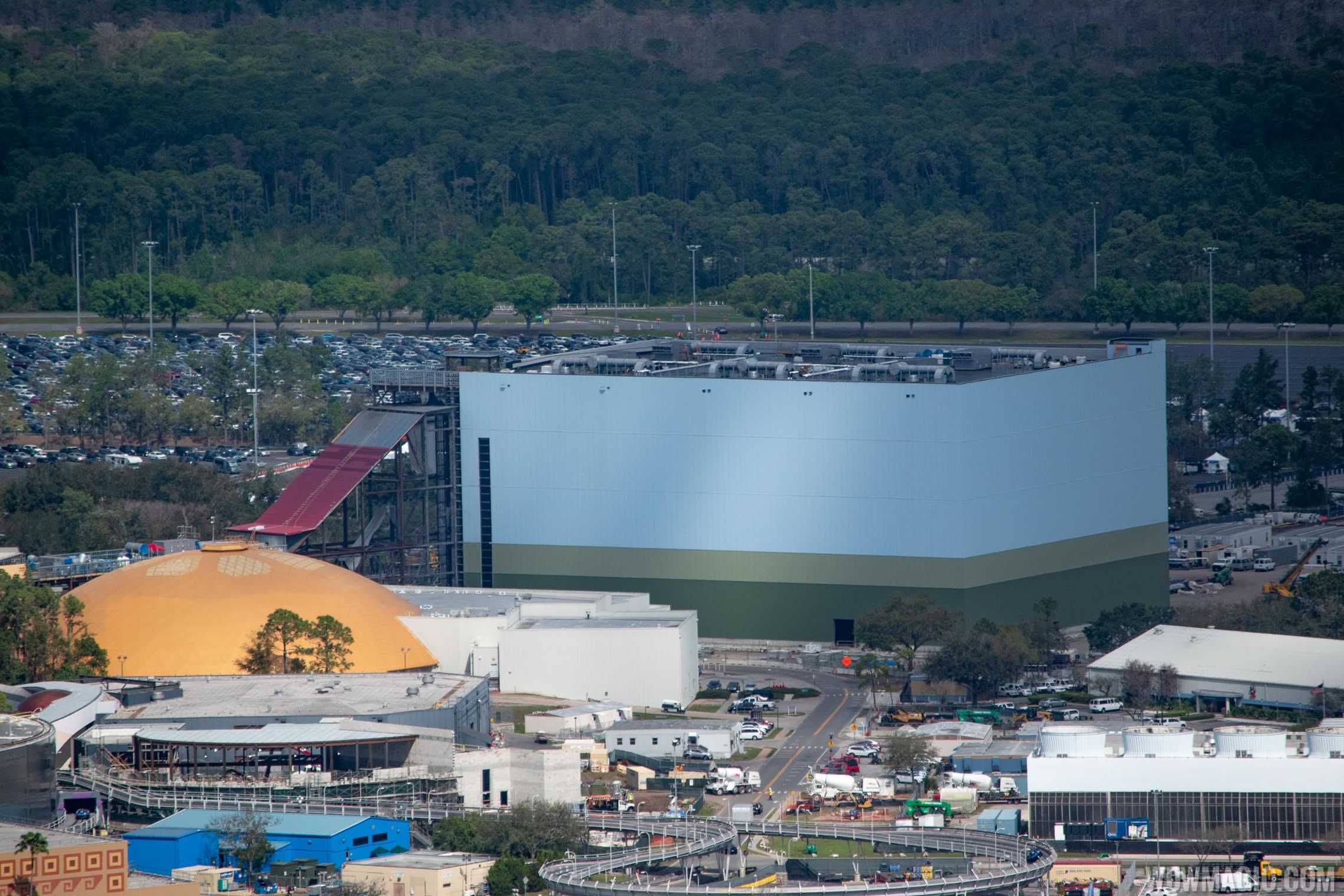
I mean we have ECPOT which has was a very innovative and special park and now is basically a dead park and a former shell of itself. Yes, we are seeing progress but think about how long it took Disney to actually put time into this park. And yet again we are seeing Disney resort to overusing IPs especially in ECPOT. Some of the attractions make sense since they do fit the overall theme and idea of ECPOT but others you can’t help but ask yourself why. For example the monstrosity of an attraction, Guardians of the Galaxy: Cosmic Rewind is terrible. Did they even try with that show building? I mean come on… You could have done better than that. Okay genius so you slapped green paint on it to try to hide it but what about the rest of the building? Such an eyesore especially from the parking lot. To be fair, we haven’t actually seen much footage or the ride experience yet and I’m not trying to bash it to hard. I am simply just using this ride specify as an example.

Image Credit: WDWMAGIC.Com

It seems like all Disney is going is slapping IPs in empty spaces to fill up the park as quick as possible. What happened to the original idea of ECPOT with original attractions? Think about it, with the technology Disney has, the money they have and other resources available to them imagine if they did remake and update EPCOT. I think the ECPOT we would get would 100% look like the early concept art we saw. There are so many examples more examples I could use to illustrate my points however, I choose EPCOT since I know the most about this park.

Final Thoughts

Overall, I think if you look hard enough, we can see there is being progress made with creativity and innovativeness but I still think it’s too far berried under cooperate greed and cooperate politics. I think with all the new technology and tools that are out there now, it will be fun to see what comes from it. I really enjoyed writing this piece and be able to revisit this paper I wrote was fun to do. In the future, I hope to do more Disney content whether its reviews, reflections like this one or news. I hope you enjoyed!