Extended Stay Frenzy – Hilton, Marriott & Hyatt Launching New Brands

Within the past two years, we’ve seen an explosion of new hotel brand development and rapid advances in the way we travel. One of those new found changes is extended stay hotel brands such as Home2 Suites, Residence Inn, Hawthorn Suites, Hyatt House and more. 

An extended stay hotel offers guest rooms with larger living spaces, kitchenettes and additional amenities you wouldn’t find in a traditional hotel room. These types of hotels are aimed at travelers or guests staying for longer periods of time while offering the comforts of home. 

Extended stay hotels are nothing new to the industry, and have actually been around for several decades. During and after the pandemic, extended stay hotels have grown rapidly and quickly became the fastest growing segment in the hotel industry.

With all this new found expansion and an already crowded hotel market, brands like Marriott, Hilton, Hyatt and even Wyndham have developed new brands to capitalize on the growing market and expand their reach. In today’s post, we will be taking an in-depth look at some of these newly created brands, how they plan to differentiate themselves and what we can expect as consumers from these new brands. First up, LivSmart Studios by Hilton!

LivSmart Studios by Hilton:
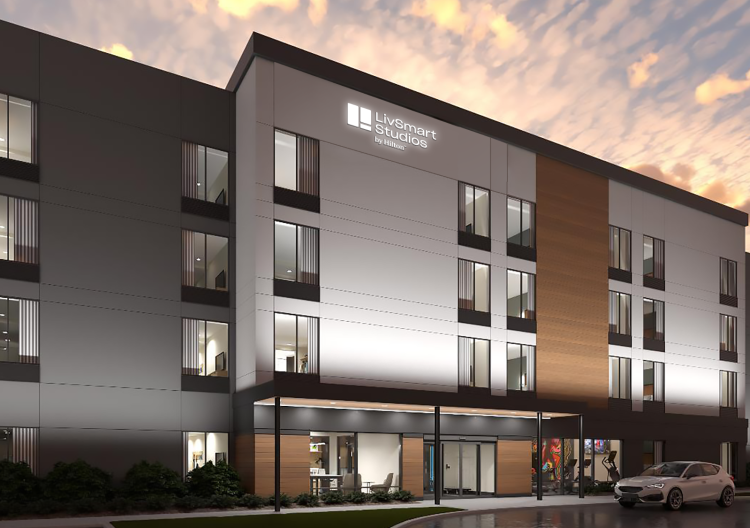
Back in May of 2023, Hilton teased it was in the process of developing a new extended stay hotel brand with Project H3. 

“After much anticipation, we’re thrilled to announce that LivSmart Studios by Hilton is official,” Isaac Lake, brand leader of LivSmart Studios, said in a statement. “With a resilient $300 billion workforce travel market, the extended-stay segment continues to grow. It has never been as primed as it is now for this long-stay brand, and we’re thrilled with the initial excitement we’ve received from owners.”

LivSmart Studios by Hilton will be aimed toward travelers and guests looking to spend about 20 nights or more at a time. Each location will feature communal common areas such as fitness centers, laundry areas and outdoor spaces with grills as well as fire pits. Hilton previously announced there would be free breakfast with grab-and-go items.

Rooms will be designed and furnished like Apartment-style studios. Each will feature fully-equipped kitchens with full-size refrigerators, dishwashers, microwaves, two-burner stove tops and plenty of storage. Multipurpose furniture in the guest rooms will create versatile spaces for working as well as relaxing and, of course, sleeping

It is reported that the first location should be open for business by the end of this summer in Kokomo, Indiana.

StudioRes by Marriott:

Prior to Hilton announcing Project H3, Marriott announced Project MidX Studios, another extended stay brand it would be adding to its 30+ brands. For context, Marriott already has four extended stay hotel brands, including:

  • Residence Inn by Marriott, where all rooms are suites and feature kitchens, with complimentary breakfast and an evening happy hour.
  • TownePlace Suites by Marriott, where rooms range from studios to two bedroom suites, and feature kitchens; Marriott describes this brand as being for “the Upbeat Realistic traveler”.
  • Element by Westin, where rooms range from studios to one bedrooms suites and feature kitchens, with complimentary breakfast and an evening happy hour; this is typically higher end than Residence Inn and TownePlace Suites
  • Marriott Executive Apartments, which is the closest thing in Marriott’s hotel portfolio to an apartment-style accommodation

Looking at the StudioRes design, it shares similarities to that of Hilton’s design however, I personally feel this design is very bland and slapped together for the sake of it. Marriott seems to be aiming at attracting more owners/operators with a cheaper startup and operational brand rather than improving on a niche market concept that can benefit potential new guests.

StudioRes will have a focus on the United States and Canada, with the most affordable cost-per-room product for developers, intended to accelerate speed-to-market, with a low cost to build. For a property with 124 keys, the model targets a build cost of $13-14 million, with around 54,000 square feet of total building area. The brand will also have a light operational cost model for owners and franchisees, meaning you can expect these hotels to not have many amenities.

Comparing this to the previously discussed Hilton design, I feel as though the Hilton design is way more put together and actually feels more detail oriented, has that service standard Hilton is known for and is overall a better concept. I feel like this concept is just pinching pennies and could honestly use more time and effort in development. Just looking at the concept art, it looks very rushed and slapped together. The exterior rendering doesn’t even look like a hotel at all. Plus why is there no bathroom rendering? Does this mean we are going to get a cheaply slapped together bathroom?

On many online threads, there are several loyal Marriott guests commenting on the company’s massive growth and inability to balance between developing its newer brands and keeping its older brands afloat.

“I get that the big hotel companies need a lot of brands to justify growth. But what happens to the old brands? I don’t see anyone really building and opening new Alofts anymore. That brand seems to be just existing. I stayed at the Aloft in Wichita last year. It felt like walking into a W property circa 2006. It was a hip concept back then, but felt very dated and just completely out of place in Kansas. What about Four Points? Is anyone really building and opening new Four Points properties? I actually think that Four Points is a better brand than Courtyard but Courtyard seems to be what developers want to build when they want something more than a Fairfield but something less than a more upscale brand. At some point, Marriott has to discontinue old brands and convert existing properties to something else. I’ve noticed that a tremendous number of 1970s and 1980s Marriotts have become Delta in recent years”.

Overall, I have to say I am extremely disappointed with their concept and effort they put in. Considering Marriott wants to create a concept for extended stays for 20+ room nights, their concept doesn’t stand out or incorporate anything innovative or new. I personally think this is very lazy and sad since the company is well known from the start for being innovative and groundbreaking when it comes to hotels. I just don’t see that from this concept at all. Marriott already has Marriott Executive Apartments and those are lightyears better. You would think you would want to top that concept especially if you want to create a whole new hotel brand from it. I just don’t see how Marriott, who is known for high standards and the details, is okay with this concept.

Hyatt Studios:

Before we get into Hyatt’s new brand, a quick note, compared to the previous two concepts, this concept is a more traditional extended stay brand not an apartment style, long term stay brand. Hyatt announced its new brand in April of 2023, in order to grow the company’s portfolio, guest base and tap into this new found exponential growth of extended stay hotels. 

“We are proud to launch the Hyatt Studios brand and bring the high-quality experience and level of care promised by the Hyatt brand to smaller markets and submarkets where we don’t have Hyatt hotels,” said Jim Chu, chief growth officer, Hyatt. “We identified a white space for Hyatt, creating a compelling opportunity to significantly accelerate our industry-leading net rooms growth, care for World of Hyatt members on more stay occasions and introduce World of Hyatt to new guests in a new segment which we expect will drive increased direct bookings for all properties across the Hyatt portfolio.”

Guestrooms will marry form with function and offer suites with kitchen amenities to provide comfort during extended trips away from home. The Hyatt Studios food and beverage experience will include a complimentary grab-and-go breakfast and a best-in-class, 24-hour market with a wide variety of options to satisfy extended-stay guests – from health-conscious snacks and ready-made meals to sweet and savory staples to fulfill travel cravings, all of which can be prepared and enjoyed in the guestroom’s kitchen featuring a multi-function convection microwave.

One major thing that sticks out for me is how Hyatt states “the brand is designed to be flexible based on developer needs”. Personally, I feel a brand should be designed for the guests experience, efficiently and ease to operate. Basically, what I’m getting out of this is there will be little to no form of brand standards. 

The specific relevant content for this request, if necessary, delimited with characters: Room design wise, much like Marriott, it seems very slapped together and bland. There is no pop of color or anything exciting to draw you in. While I get a kitchenette takes up a lot of room, why does it seem like the kitchen is weirdly placed in the middle of the room? Seems like they took a standard Hyatt room and slap a kitchen inside with a tiny closet. If this is supposed to be an extended stay brand, why does it lack storage options? Is it possible they just forgot that detail in the rendering or is it totally forgotten? Also notice how we don’t even get a rendering of the bathroom? Does this mean we are going to get a cheaply slapped together bathroom?

Final Thoughts:

One thing that is an immediate red flag for me as well is despite being different concepts, all three of the exterior renderings all suspiciously share the same color scheme and similar design. 

Despite this, I personally think the Hilton design is the most throughout, detailed and most guest oriented. Seems like Hilton is more focused on the guest experience instead of putting the developer first. While I get designing a new hotel prototype to minimize the start-up and operational costs makes sense, it shouldn’t be at the guest’s expense. This is just one of the many reasons Hilton always wins me over compared to Marriott, Hyatt and IHG. 

It’ll definitely be interesting to see how each of these brands expands and grows as time goes on. Will these concepts be well received or will there be massive changes made? Only time can tell.

Overview: Preventing Facilities Disasters In The Hospitality Industry.

In the hospitality industry, facilities are omnipresent and serve as the backbone of all our operations. They facilitate various activities ranging from hosting events and preparing meals to providing comfortable accommodations for guests. Furthermore, they support behind-the-scenes tasks that ensure the smooth functioning of the hotel. Within the hospitality industry, facilities encompass a wide range of spaces including hotel rooms, restaurants, meeting and convention areas, parking garages, and recreational facilities such as pools, spas, waterparks, and gyms. Additionally, they encompass essential equipment like stoves, fryers, washers, and dryers, as well as the building infrastructure that houses vital elements such as water, gas, electricity, and structural components.

Why Preventive Maintenance Matters:

It is crucial to maintain, repair, and design our facilities correctly; otherwise, the consequences can be disastrous. When we fail to do so, we often see disasters like fires, building collapses, gas leaks, power failures, floods, and more severe natural disasters occur. While most of the time we have control over weather-related disasters, there are cases when we have zero control over disasters happening. Such cases include natural events like earthquakes, hurricanes, forest fires, and tornadoes.

It is crucial to prioritize the prevention of disasters by exercising meticulous control. One effective approach is to employ preventive and corrective maintenance strategies, carefully examining blueprints during the design phase to eliminate any critical errors. Moreover, seeking advice from experts during the maintenance and design processes ensures adherence to best practices.

By neglecting the aforementioned maintenance practices or neglecting to review the blueprints, it can lead to significant catastrophes and endanger the lives of innocent individuals and nearby properties. As we shall observe through various examples, a majority of the disasters documented could have been prevented had proper maintenance been conducted, blueprints been reevaluated prior to commencing construction, and appropriate safety measures been implemented.

Hotel Fires:

Facilities fires in the hospitality industry are a disaster that can be controlled with proper measures. Neglecting maintenance, emergency procedures, or safety equipment can lead to dire consequences. Fires occur when there is an ignition source, fuel, and oxygen. In the context of a hotel room, where numerous flammable sources can be found, items such as towels, sheets, blankets, desks, curtains, and furniture can easily fan the flames and escalate the situation to a point of no return.

So, when a fire occurs in a hotel, it is crucial that our fire safety plan and equipment are effective and efficient in aiding during an emergency. The most important elements of a fire safety plan include, fire detection followed by fire notification. Fire detection includes human observation, heat detectors, photoelectric smoke detectors, ionization smoke detectors and sprinkler systems. Meanwhile fire notification includes emergency instructions and floor plans, building horns/alarms, voice alarms, visual alarms, communication systems, and smoke detectors. Additionally, if a fire does break out, fire control is very important and includes the following smoke dampers which inhibit the movement of smoke through ductwork, smoke sensors that control smoke dampers and a stairwell pressurization system that increase the air pressure in stairwells keeping them relatively smoke free.

MGM Grand Fire:

Looking back to 1980, the MGM Grand Fire was the deadliest hotel fire ever to occur. According to several reports and investigations, it was found the fire began around 7:10 a.m. Upon further investigation, it was discovered that the casino floor did not have sprinklers or any fire suppression systems which ultimately caused the entire casino floor to be ravaged by fire in six minutes (Fascinating Horror, 2021). It was also found that as fire and smoke quickly rose up the hotel tower, no early warning systems were present and fire alarms or safety systems were not functioning to warn guests before it was too late. By the time the guests in the tower found out there was a fire, it was too late which caused many to be trapped in their rooms and on the upper floors of the tower cut off from exits entirely. This disaster unfortunately took the lives of 87 people and injured more than 600 (Verastigue, 2022).

To begin with, this disaster could have been avoided if the bakery case that caused the fire was maintained properly. If there was preventative maintenance being done, perhaps the (reason case sparked) could have been spotted and fixed. Additionally, had there been proper fire detection, warning and suppression systems, the fire could have been contained sooner and tragedy could have been prevented.

Building & Facilities Collapses:

While we have control over fires and the outcomes in our facilities, unfortunately when collapses occur, we tend to have less control over them due to the fact that most problems that cause collapses occur in the design and construction stages. If we are the ones designing and constructing the facilities, we have control over collapses. Whereas if we are utilizing an existing facility, we will not have control over the design of the facility and its infrastructure. Most collapses can be prevented if blueprints, designs and technical drawings are checked again before going to the construction phase. It’s when we fail to do this simple yet easily overlooked step, that we see incredible building collapses as results of engineering failures.

Hard Rock New Orleans Collapse:

Unfortunately for the under construction Hard Rock New Orleans, they learned this mistake the hard way after it was too late. It was a beautiful and normal day just like any other day until tragedy struck and Hard Rock came crashing down onto the street below. Work was being done on the upper floors where concrete was being poured for supports as well as the structure making up the floor. Additionally, work was being done on the 18th floor where the pool was hoisted up by crane only hours before. Suddenly without notice, the under construction hotel collapsed killing three workers, and injuring hundreds both on the job site and street below. Immediately, the public demanded answers as to why the hotel collapsed and the cause of the incident. 

In the aftermath of the incident, it was discovered by OSHA that the engineer “failed to adequately design, review or approve steel bolt connections affecting the structural integrity of the building” (OSHA, 2019). Additionally, Walter Zehner, a technical spokesman and structural engineer commented “You can see where the two upper floors are moving kind of together rather than individually and that indicates that the 16th floor failed and the other floors just came down with it” (Hammer, 2021). It was found the building was so un-structurally sound that many of the steel beams were overstressed by 300%.

Hyatt Regency Lobby Collapse:

Sadly, a similar tragedy occurred at 1981 Hyatt Regency Hotel in Kansas City where an elevated walkway collapsed, killing 114 people and injuring 200 more. The lobby area featured a three tiered elevated walkway that took guests across the resort to different meeting spaces and guest areas. During an investigation launched directly after the incident, it was found that a change in the original design of a series of walkways suspended above the lobby’s hotel led to a connection failure. The original design had all of the walkways suspended from the ceiling with steel rods retained by nuts. Even prior to the design change, the original design only supported 60% of the minimum load required by the Kansas City Building Code. The contractor responsible for manufacturing the steel rods objected to the use of threaded steel rods, as they felt the threads would be damaged during construction. They proposed an alternative plan where the lowest platform would be supported on one end by the ceiling, but on the other end by an upper level platform. This of course left the upper level platform, already under-designed, with a double load (Tyrell, 2020). Much like the Hard Rock incident that occurred recently, this incident in 1981, could have also been prevented by simply double checking blueprints, designs and technical drawings before starting the construction process.

Tropicana Parking Garage Collapse:

Similarly, back in October 2003, the Tropicana Casino and Resort in Atlantic City also had a collapse. During a major expansion and renovation project, the resort was constructing a new parking garage to be able to hold the higher capacity of guests entering the resort. Unfortunately, while constructing the parking garage, it collapsed in on itself, killing four construction workers and injuring 21 others (OSHA, 2004). It was also discovered during the investigation that multiple reasons were to blame for the collapse. First, the contractor building the garage did not properly support the structure in areas where the concrete was being poured and cast for the supports. Secondly, it was found that the parking garage levels were beginning to show signs of cracking around major support columns and areas that were just freshly poured a week to a few days prior. “The Fabi superintendent failed to seek the immediate attention of the general contractor/construction manager or the structural engineer of record when Fabi employees brought to his attention the cracks around the exterior columns on grid line 1 at levels P4 thru P7. The employees noticed consistent cracks at the interior long face of the columns extending at an angle of forty-five degrees towards the edge of the slab/beam. These cracks should not have been dismissed as shrinkage cracks because of their uniformity, depth, and pattern on all levels. The collapse could have been averted if immediate attention was sought” (OSHA, 2004).

Much like the previous two incidents resulting in collapses, this incident also could have been prevented if the blueprints and technical drawings were double-checked for design flaws prior to construction starting. Additionally, had the engineer stopped to address the reported cracks and flaws that were discovered, the incident could have also been prevented by performing the proper work to address the issues and stop them from becoming more severe.

Final Thoughts:

To conclude, it is crucial that we maintain, repair, and design our facilities correctly; otherwise, the consequences can be disastrous. Our facilities in a hotel include hotel rooms, restaurants, meeting & convention spaces, parking garages, recreational areas like pools, spas, waterparks, and gyms, equipment such as stoves, fryers, washers, and dryers, and even the infrastructure of the building. When we fail to take proper steps and do maintenance, we often see disasters like fires, building collapses, gas leaks, power failures, floods, and more severe natural disasters occur. Most disasters we have full control over before they even become disasters. We can prevent disasters through preventive and corrective maintenance, cross-checking blueprints during the design stages to ensure no crucial errors were made, and consulting with experts when doing maintenance or design to ensure we are doing it correctly.

Support My Work: Buy Me A Coffee!

One last thought before we go! Are you enjoying the content I create? If so, I would greatly appreciate your support on my Buy Me A Coffee page.

By buying me a virtual coffee, you can help fuel my creativity and enable me to continue bringing you valuable content. Whether it’s blog posts, artwork, or any other form of creation, your support makes a significant difference in my ability to keep producing high-quality content.

Your contribution shows that you value what I do, and it motivates me to keep pushing the boundaries and exploring new ideas. Together, we can build a vibrant and supportive community around my work.

So, if you’re enjoying what you see and would like to support me, click the button above to visit my Buy Me A Coffee page. Your support means the world to me, and I genuinely appreciate it.

Thank you for considering supporting my creative journey. Your generosity is deeply appreciated! See you in the next post!